
A hot room over the garage
The room over the garage and upstairs bedrooms usually run hottest, often because the attic above them is thin at the edges. An even top-up out to the walls usually helps most.
Hot upstairs and a thin, settled attic? We check what's there, seal the gaps and add insulation so the house holds its temperature.
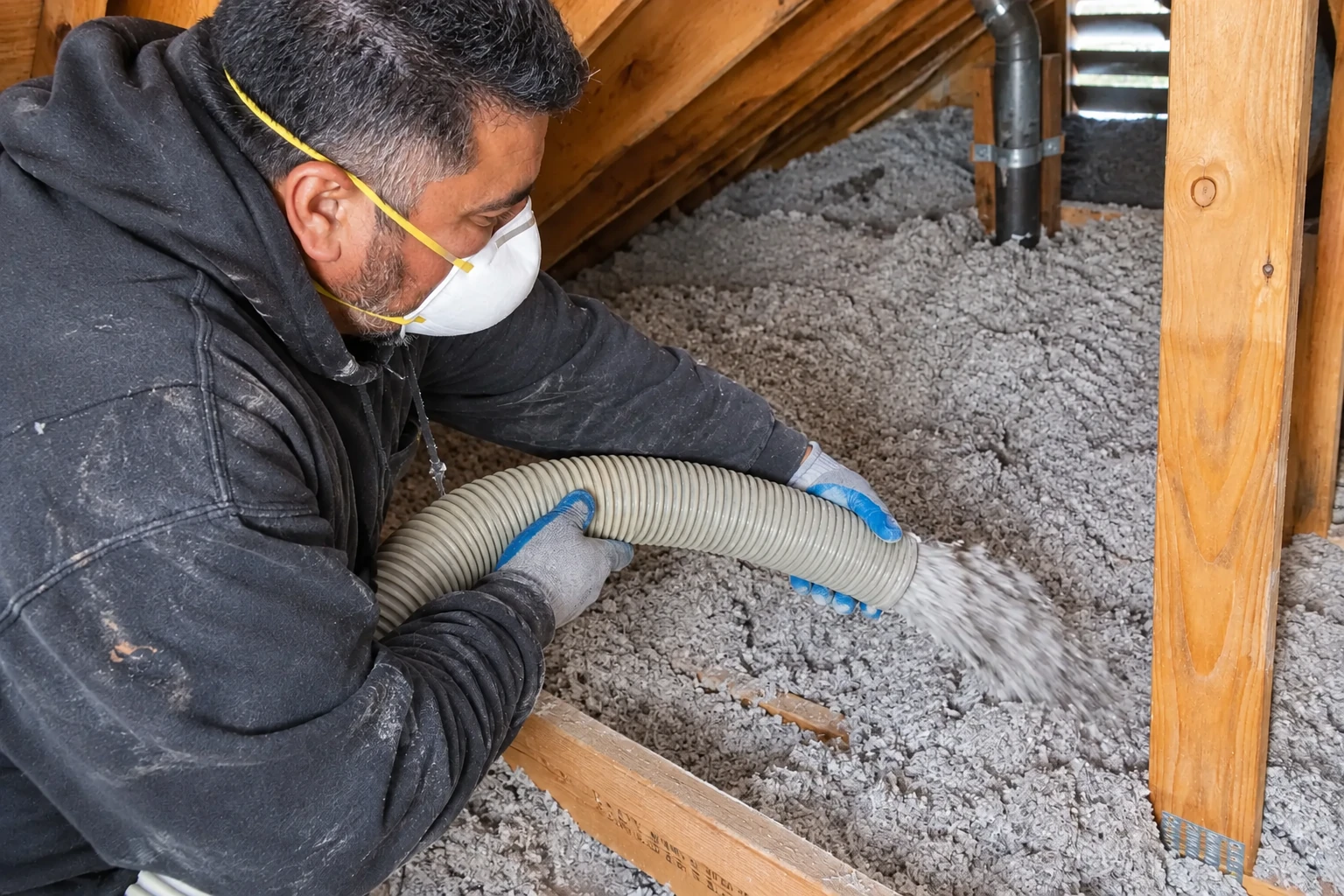
Retrofit insulation in Indio adds insulation to the house you already have. Usually we blow loose fill through a hose across the attic floor, and sometimes we fill the walls too, so the house slows summer heat and the rooms stay more comfortable.
Most calls start with a hot room upstairs, a drafty bedroom over the garage or a power bill that climbs every summer, in a house that already has some insulation, just not enough. Professional Indio Insulation Services is based in Indio and works in the Coachella Valley cities around it. The price of a retrofit turns on how many inches are already up there, whether any of it has to come out first, how easy the attic is to reach and whether the walls are part of the job. The schedule turns on the same things, plus how much is stored in the attic and what the wiring looks like once we're up there. We're fully licensed and insured, and the work itself, installing material to control heat or sound, is what California's Contractors State License Board defines as insulation contracting.
We're known for doing attic work in order. Gaps around can lights, pipes and the hatch get sealed first, because insulation laid over a draft spends its life fighting that draft.
I come out myself to look at the house and write the estimate. Our lead installer runs the crew, and I check the work over before we call it finished.
Attic work moves dust, ladders and boxes through your rooms. We cover what we walk past and clean up before we leave, because I want the house looking the way we found it.
I start with what your house already has, because a retrofit builds on it. At the estimate I measure how many inches are up there, look at the condition and work out whether the job is more in the attic, filling the walls or both. On the day, stored things come off the attic floor first so the new material can lie flat, and we check for old wiring before anyone starts. Then we seal the gaps around lights, pipes and the hatch, keep the eave vents open so the attic still breathes, and blow in the fill evenly all the way to the edges, where older jobs are usually thinnest. Our lead installer runs that work, I check it over, and we clean up before we go.
A lot of retrofits come down to attic insulation done over an attic that already has some, and that page goes deeper on the attic itself. Spray foam insulation costs more and seals air while it insulates, so it earns its price when your ductwork runs through the attic. Otherwise, sealing the gaps and topping up loose fill usually gives you more for the money, and that's what I'll usually recommend.
The room over the garage and upstairs bedrooms usually run hottest, often because the attic above them is thin at the edges. An even top-up out to the walls usually helps most.
Old loose fill settles over the years and gets flattened by anyone who crawls through for cable or AC work, so the inches you have now often aren't what went in.
Some older houses have walls with little or nothing in them, and more attic insulation won't do much for a room that loses its cool through the outside walls.
If what's up there was soaked or is full of droppings, putting new material on top keeps the problem in your house, so that layer comes out before anything new goes in.
Send the form and we'll reply within one business day to set a time for me to come out. The estimate is free, done on site and in writing, with no obligation.
Mention roughly when the house was built, because an older home can mean old wiring in the attic or extra steps to plan before any wall work.
Say where the hatch is and what's stored up there, since getting in and clearing the floor shapes how the day goes for our crew.
If a room feels hot through its outside walls, tell us, so I can look at those walls on the same visit and your estimate covers everything at once.
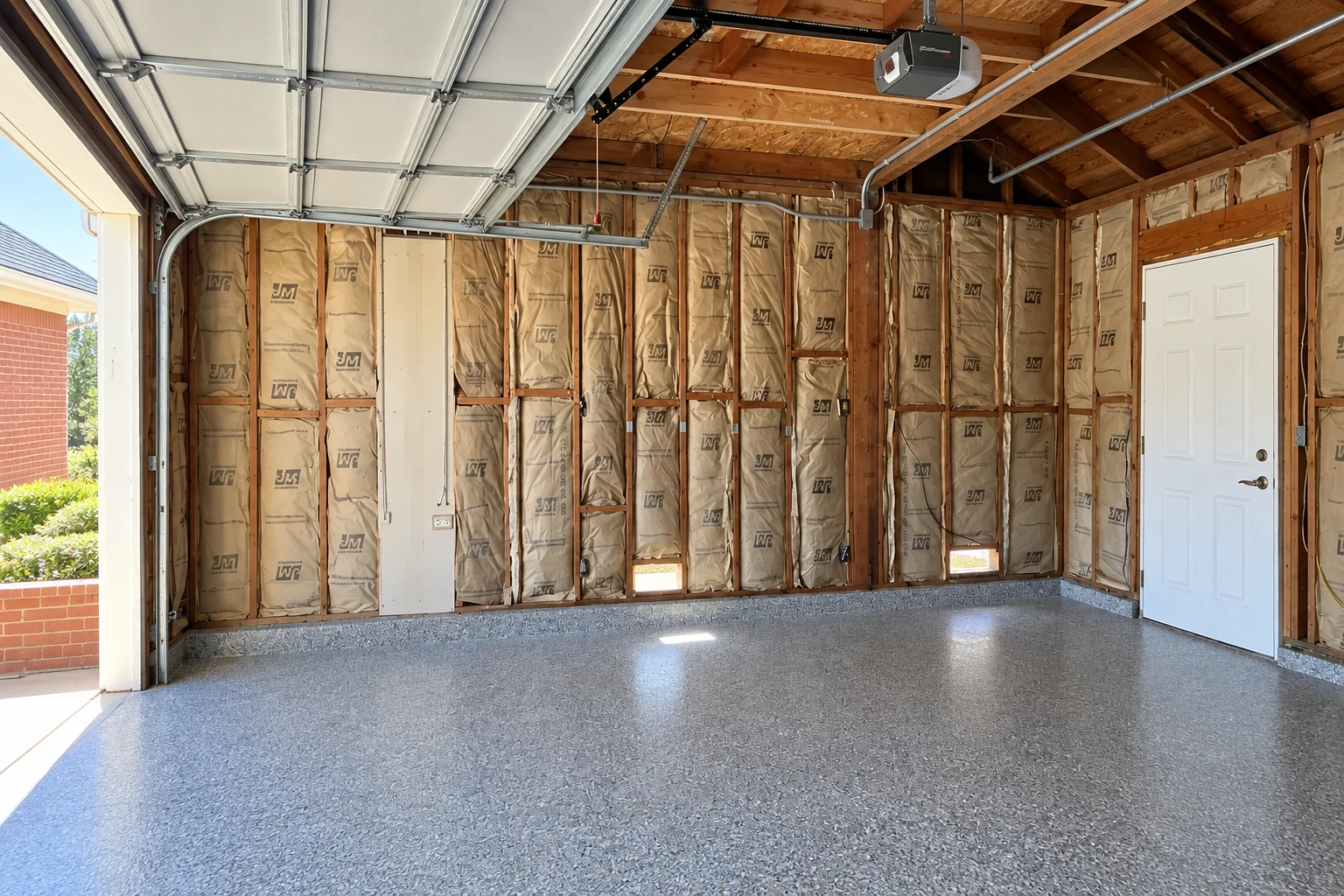
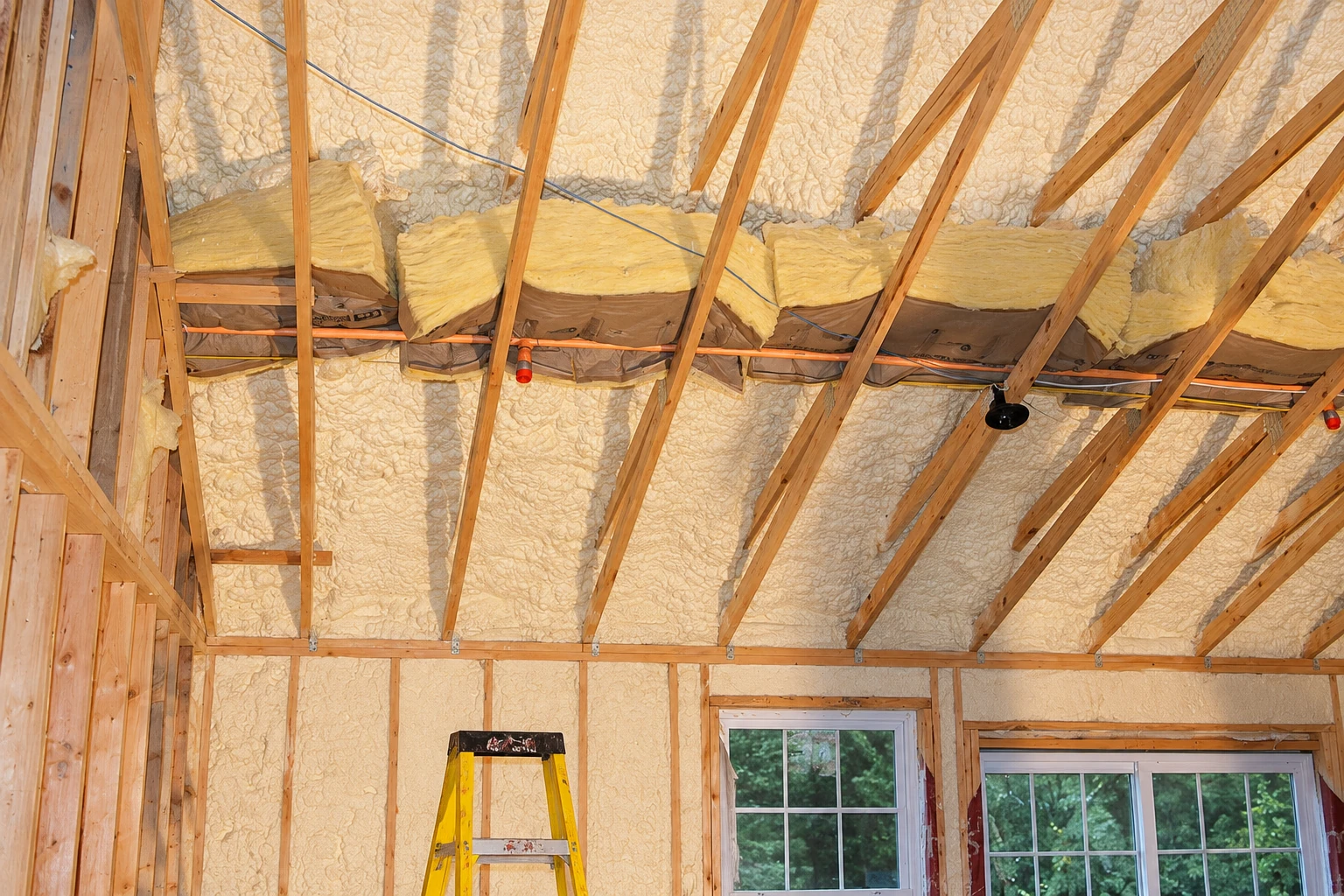
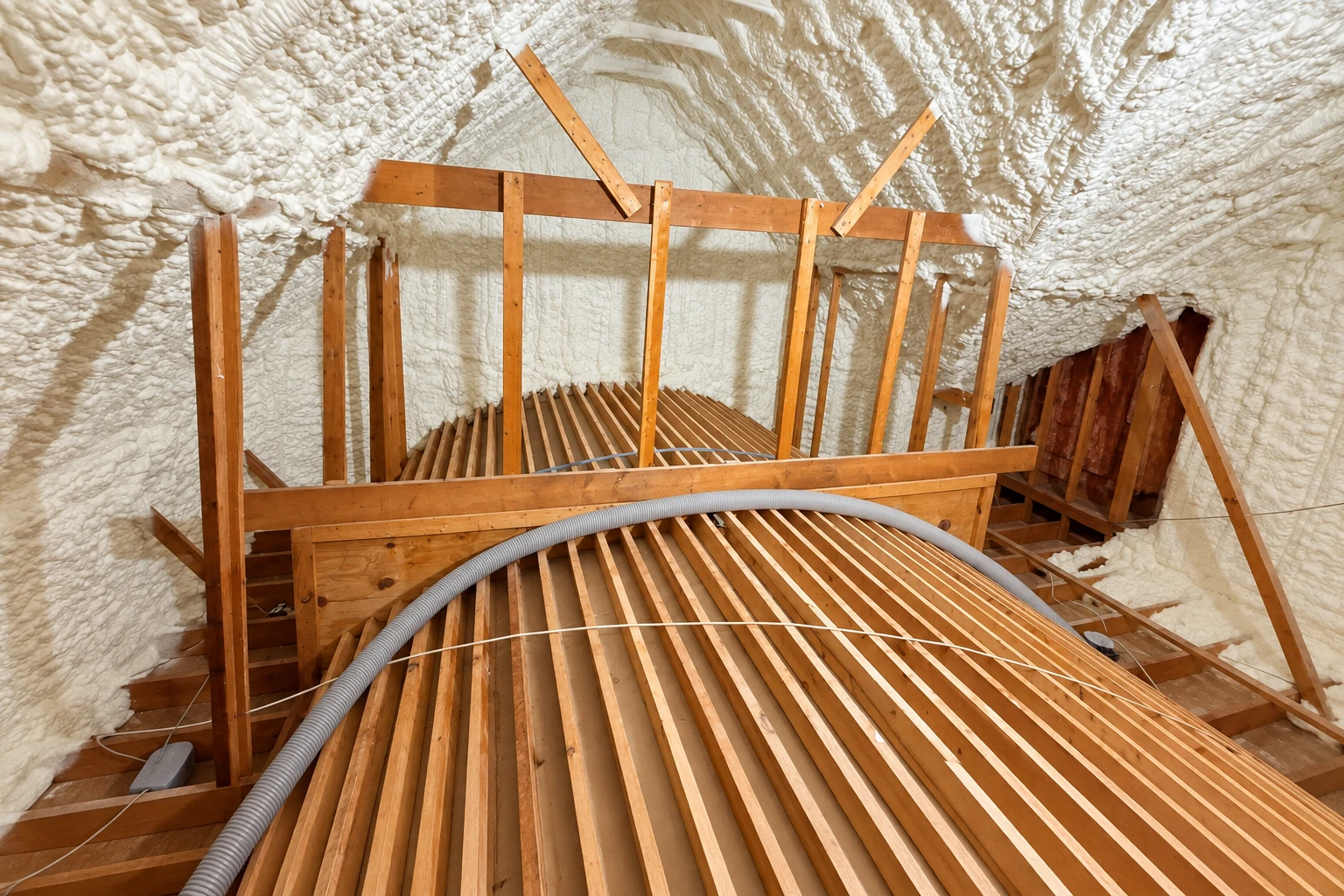
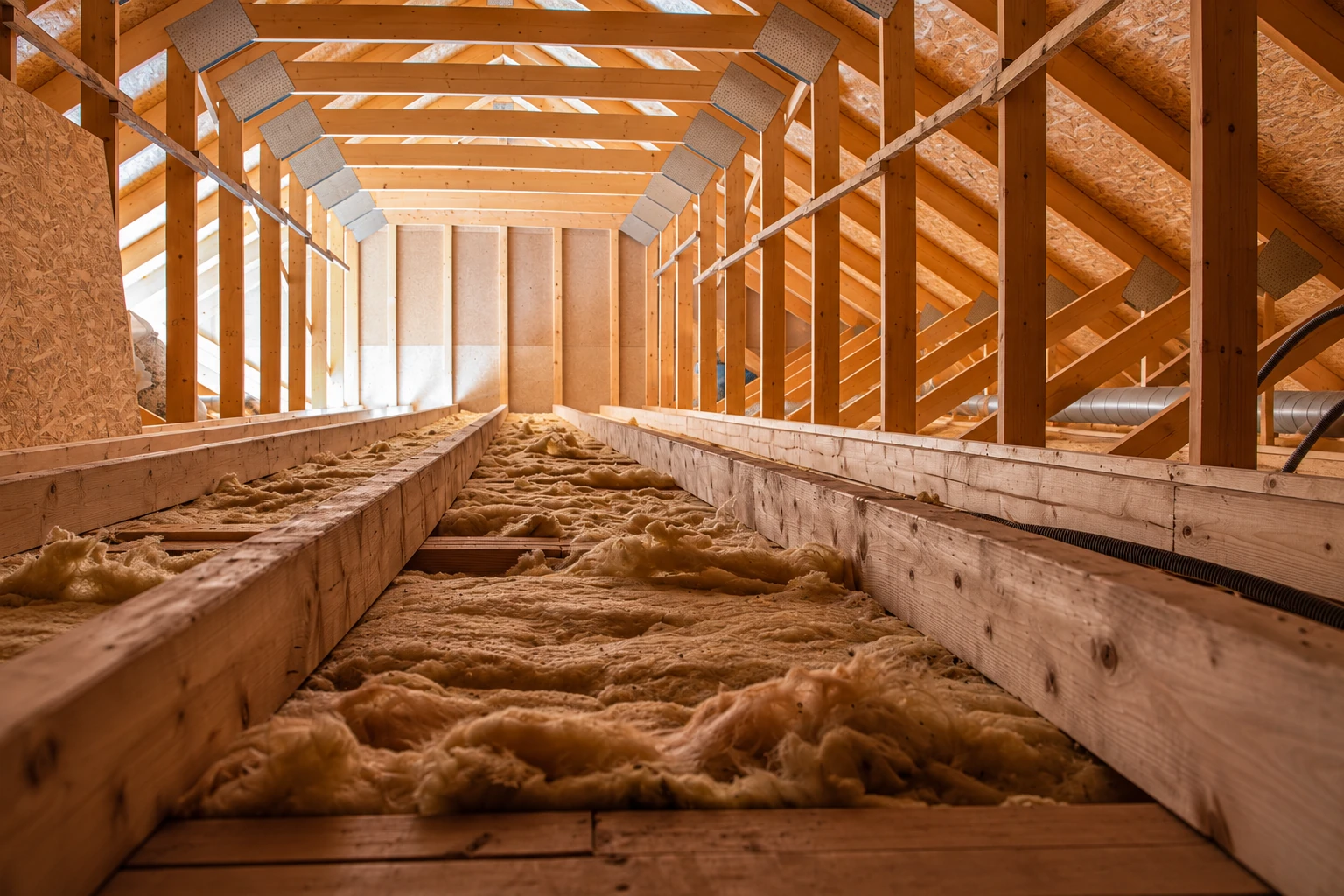
These photos show blown-in attic floors, sealed hatches and wall fill layouts that are worth talking over when I look at your house.
Straight answers on the state rules, the walls, the cost and the upkeep that come up when Indio homeowners add insulation.
Enough that old and new together reach the state's target, not just a new layer. In the existing attic of a low-rise home, California's Energy Code counts the total and sets standards by climate zone, so the right depth depends on where the house sits. When we finish, state rules have us certify in writing that the work meets them, and that letter belongs with your home records.
Usually, yes. With drill and fill, insulation is blown into each wall cavity through small holes near the top, and those holes can go inside or outside, so you pick the side. If your house was built before 1980, lead safety rules can apply depending on how much wall is disturbed, so ask how we'll handle that before drilling starts.
Attic insulation in the Riverside area usually costs about $1,500 to $5,000 per job, and that's the area's going rate, not a quote from us. Where yours lands depends on attic size, how much is already there and whether anything has to come out first. Your estimate is free and written, with each step listed in the order we'll do it.
No, insulation needs no maintenance once it's in place. The whole cost comes up front, so unlike your AC there's nothing to budget for down the road. That's a big part of why I'd rather see it done once, in the right order, with the sealing finished before the first bag goes in.
It can be. Federal energy guidance counts a radiant barrier as a type of insulation that's especially useful in hot, sunny climates, where it helps keep homes cooler, and Indio summers fit that. Whether one belongs in your attic depends on the roof and what's already up there, so it's a fair thing to raise when I come out.
Indio attics are far easier to work in before summer heat returns, so call (760) 262-0752 or send the form now.