
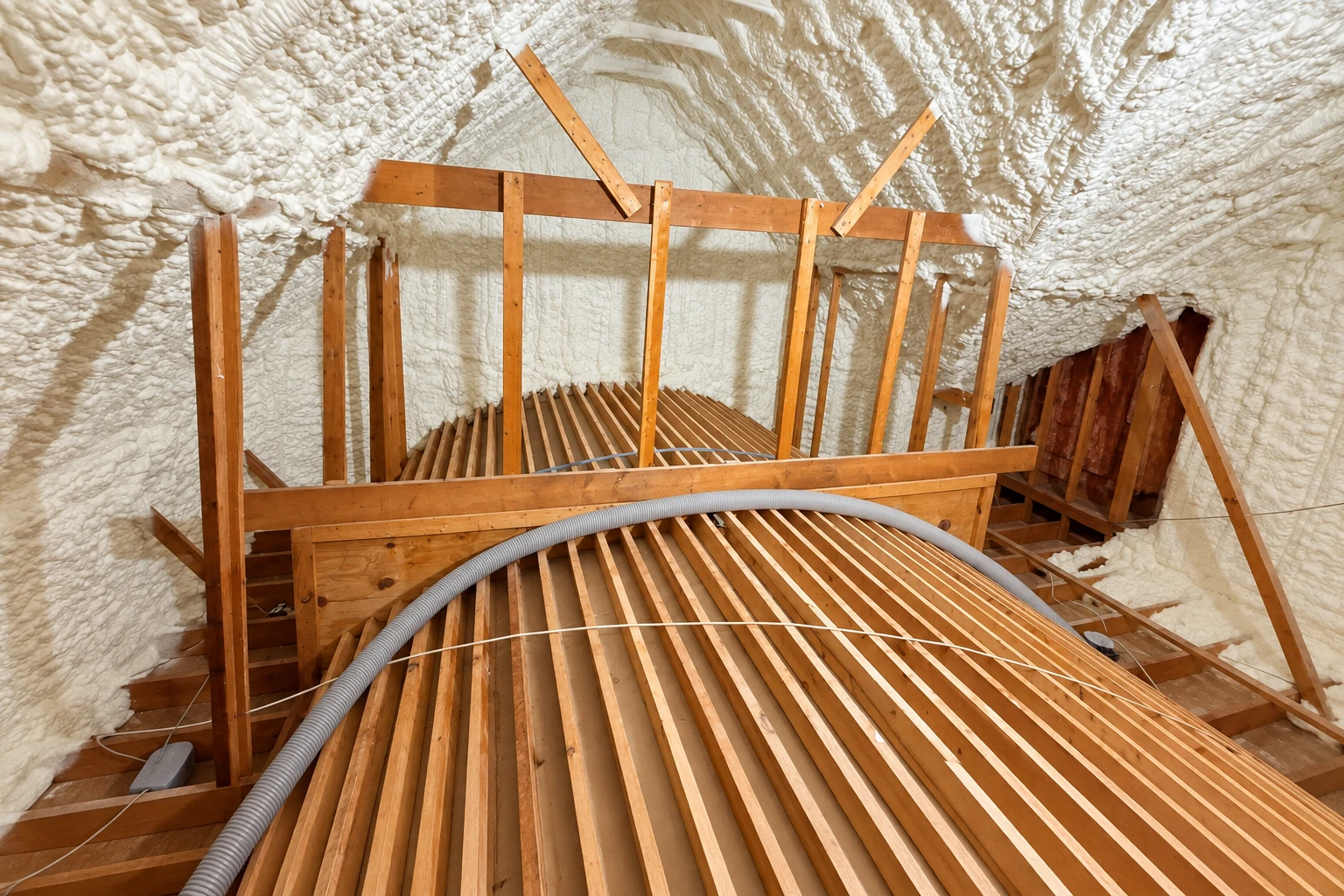
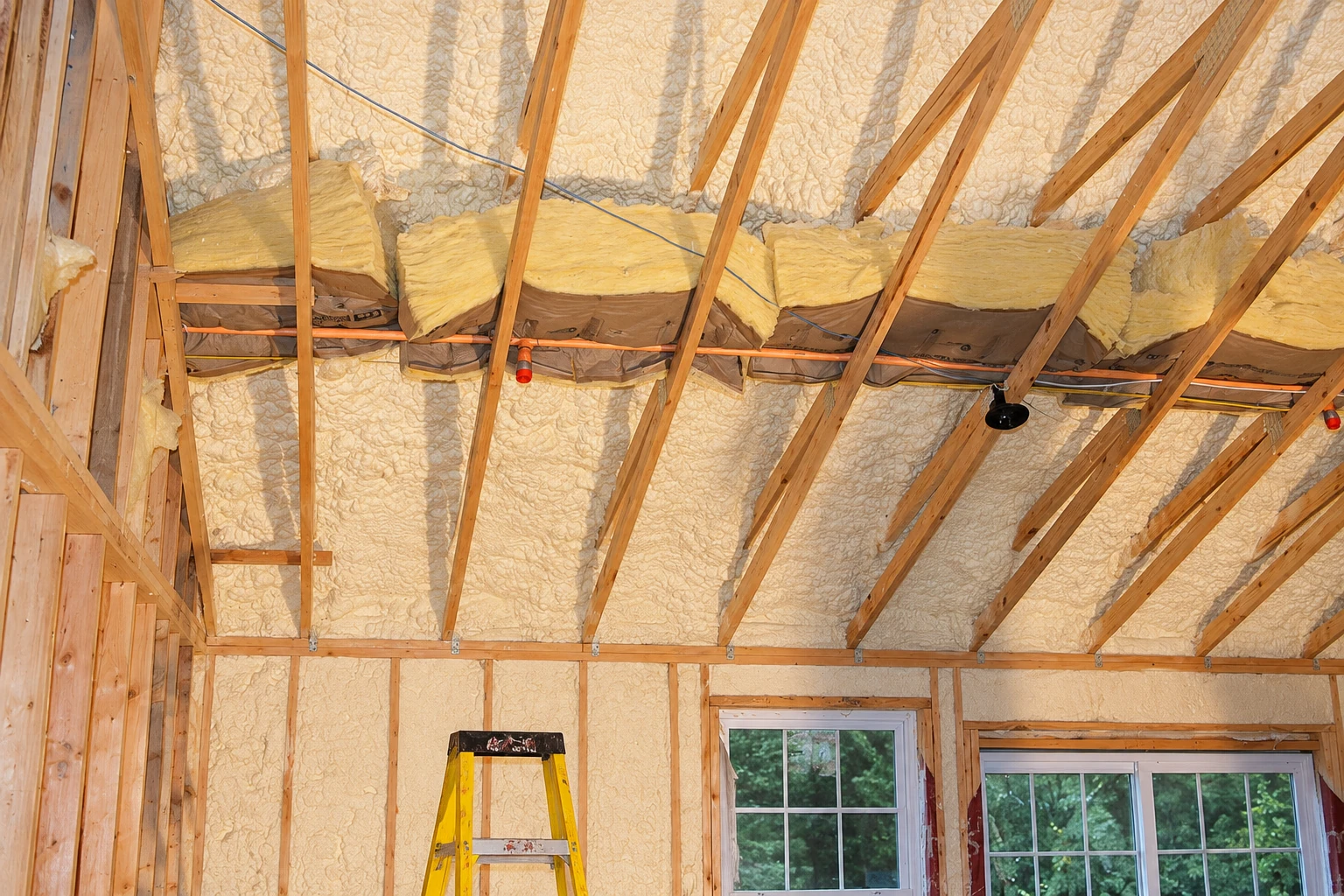
Spray foam insulation
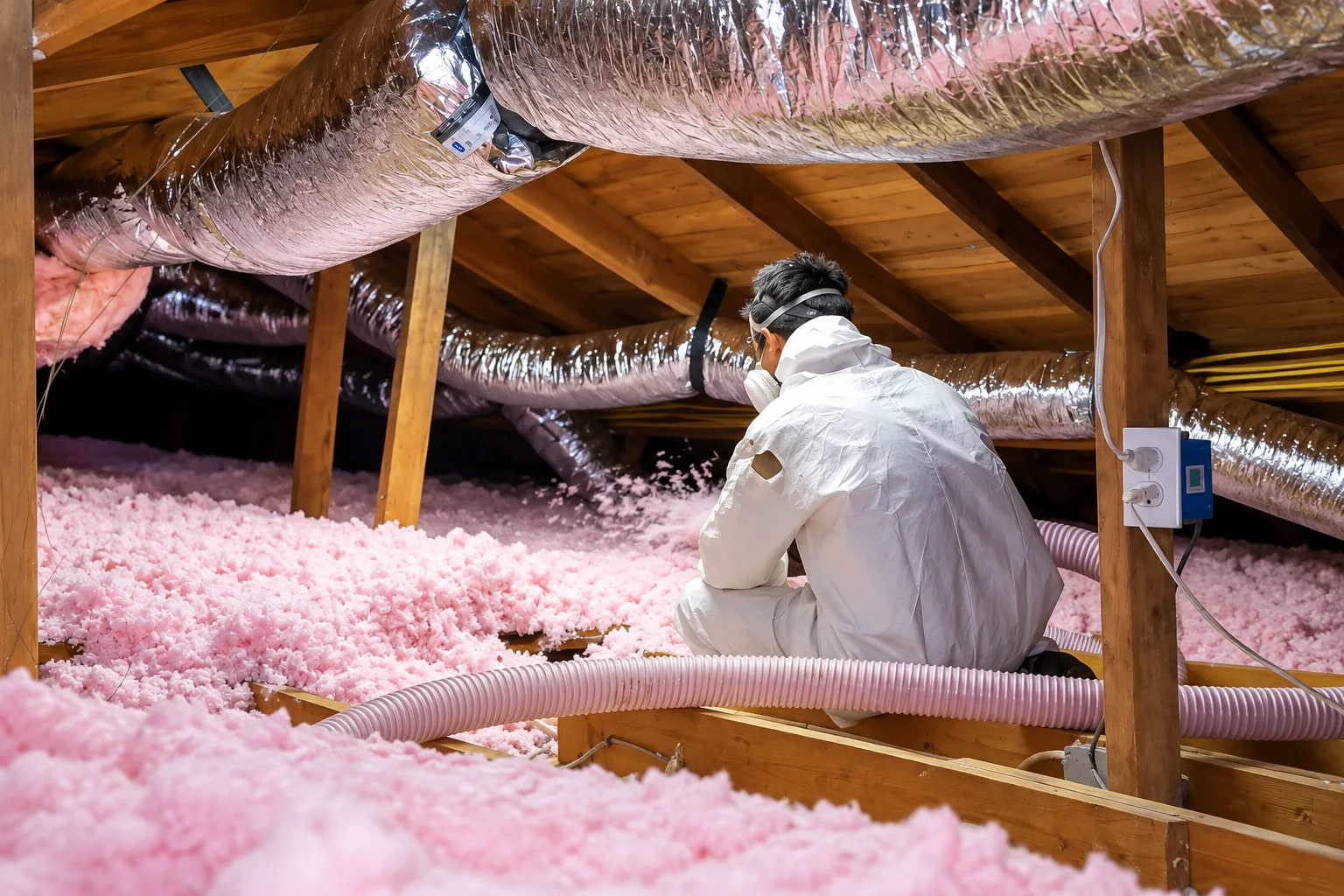
Foam costs more than loose fill, but it seals air while it insulates. We usually suggest it when your ductwork runs through the attic, and otherwise sealing and topping up wins.
Professional Indio Insulation Services is an insulation contractor based in Indio, CA. We check, seal and insulate attics, walls and crawl spaces, and we pull out old insulation that's soaked, flattened or full of droppings before anything new goes in.
Indio is the biggest city in the Coachella Valley and it keeps growing, so in one week our crew might work in an older ranch house near the city center and a tract home only a few years old out on the edge of it. The older houses usually have a few inches of fill that's settled flat or been chewed through, and the newer ones often have a decent layer with open gaps around the hatch and over the room above the garage. We see the same split in Coachella and La Quinta.
What you pay moves with the size of the attic, what's already up there, whether it has to come out, and whether foam makes more sense than loose fill. The schedule mostly turns on removal and on whether the city wants a permit, which we sort out before we book the crew. I write each step into your estimate in the order we'll do it. On an older house, the old insulation usually sets the job, and on a newer one, the sealing does.
We close the gaps around can lights, pipes and the attic hatch first, because new insulation laid over an open gap just fights the draft coming up through it.
If what's up there got soaked or is full of droppings, it comes out before anything new goes in, because covering it keeps the problem and the smell in your attic.
We keep the eave vents clear so the attic can still breathe, and we fill the edges as deep as the middle, since thin edges are where the heat gets through.
Foam costs more than loose fill, but it seals air while it insulates. We usually suggest it when your ductwork runs through the attic, and otherwise sealing and topping up wins.
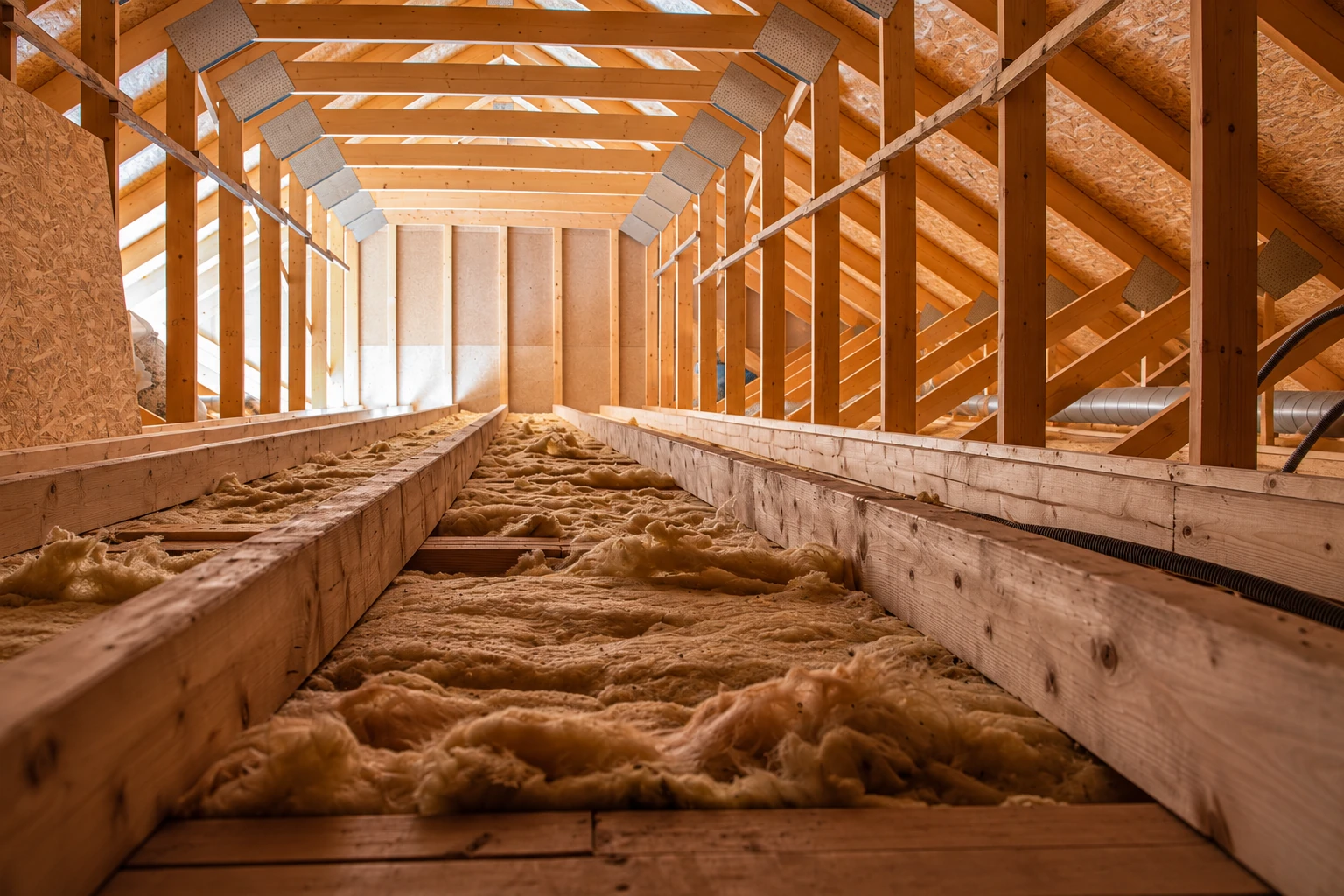
Most hot upstairs rooms start in the attic. We measure the inches already up there and tell you plainly whether to top it up or start over.
Loose fill blown through a hose reaches the low corners of a tract-home attic where rolls won't lie flat, and it settles around wiring without leaving empty spots.
When the power bill is high and more than one room feels off, we look at the attic, walls and floors together and fix them in the right order.
We vacuum out the old fill, bag it and haul it away, then look over the attic floor for leaks or damage before anything new goes in.
Most Indio houses sit on slabs, but older ones built over a crawl space often have cold floors. We insulate between the floor framing from underneath.
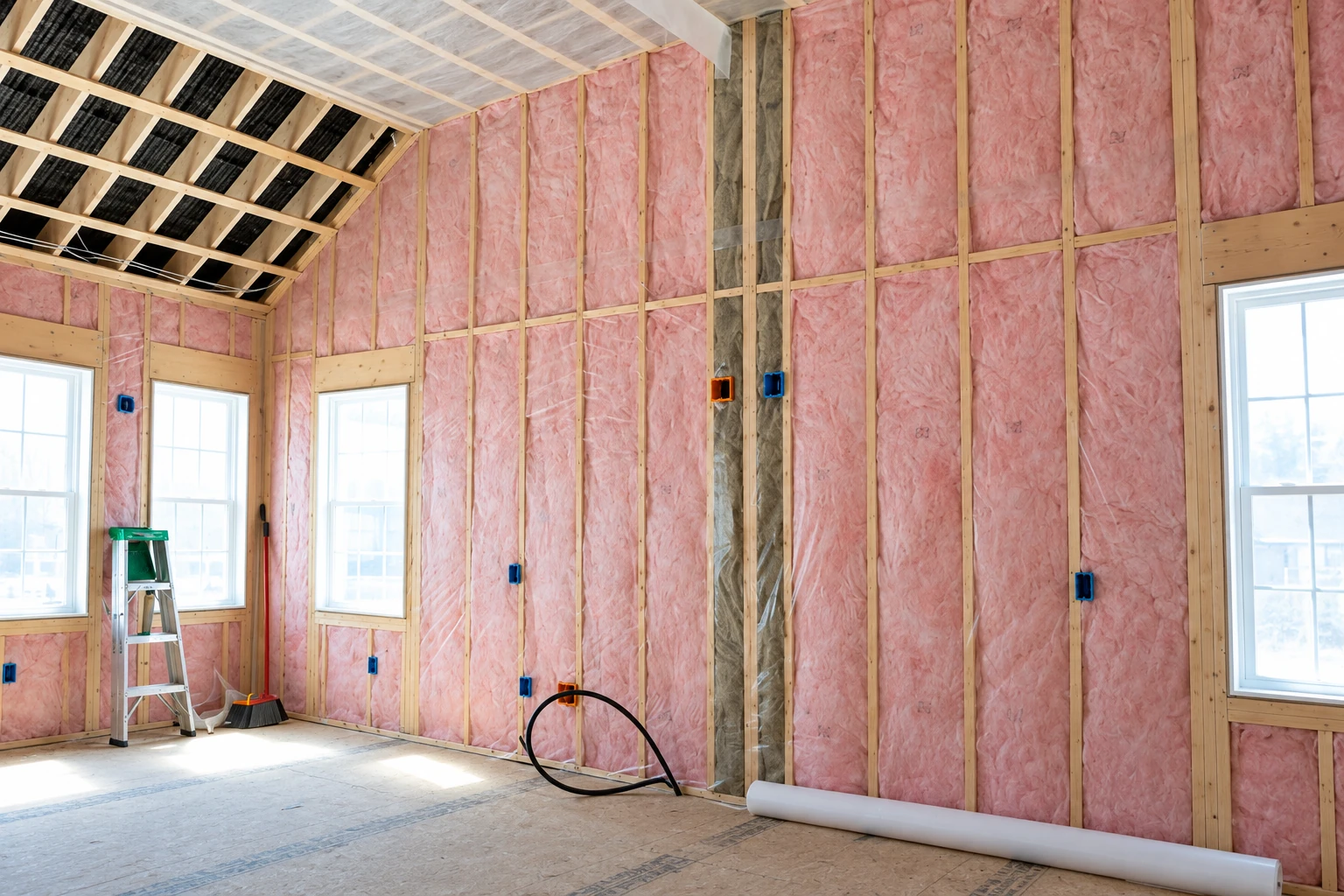
Older houses sometimes have empty or sagging wall cavities. We fill them through small holes we patch afterward, so you keep your drywall and still get insulated walls.
We track down where air slips through, around wiring, plumbing and the room over the garage, and close it off so your insulation can actually do its job.
Basements are rare in Indio, but where a house or building has one, we insulate the walls so the space down there holds a steadier temperature.
This is the dense foam that blocks moisture as well as air, so we use it where water or ductwork is the concern, not as the default for every attic.
Open-cell is lighter, softer and costs less than closed-cell, and it fills odd roof lines and wall cavities well where moisture isn't the worry.
For property managers and small business buildings, we insulate offices, units and shops, and plan the work around tenants and business hours so the day keeps running.
We lay a heavy plastic sheet over the dirt under a raised floor, overlapped and sealed at the seams, so ground moisture stays out of the framing.
In walls, attics and crawl spaces that need one, we install a layer that keeps moisture from moving into the insulation, placed on whichever side the job calls for.
Before any insulation goes up, we seal the openings where interior walls meet the attic floor and the gaps around fans, flues and vent boxes.
For a finished house, we add insulation where it's missing without tearing the place apart, working from the attic, the crawl space and small patched holes.
Send the form and we'll reply within one business day to set a time. I come out myself, look at the job and write your free estimate on site, with no obligation.
I look at the job in person and go up into the attic, because what's up there decides the order of the work and I want to see it before I write anything.
Once you say go, our lead installer runs the work day to day, and I check it over myself before we call the job finished.
We cover the floors and the path to the hatch and clean up before we pack out, so your house looks the way it did when we got there.
These are the things Indio homeowners ask us most before an attic or wall job, from permits to whether you have to leave.
It may, and if it does, the permit has to be in place before any work starts. The City of Indio's Building & Safety Division issues permits for work that alters, repairs or improves a building, and the city suggests calling or visiting the division first. We check with the city for every job, and when one's needed we pull it and set up the inspections.
Yes, a contractor usually needs both a state license and a city business license. California's contractor board requires a current license when a job needs a building permit, uses employee labor or is worth $1,000 or more in labor and materials combined. The city also requires a business license of anyone doing business in Indio, including contractors based outside it. We're fully licensed and insured.
Usually not for air sealing or blown-in work, since the crew stays up in the attic and you can go about your day below. Spray foam is different, so you, the kids and the pets stay out until the re-entry time, the wait before it's safe to come back inside, has passed. I'll tell you which applies when I write the estimate.
These are the cities with their own page on our site, and we work beyond them too. If yours isn't listed, call or send the form and ask.
Call (760) 262-0752 or use the form, because the sooner I see the attic, the sooner we know whether the old insulation can stay.