
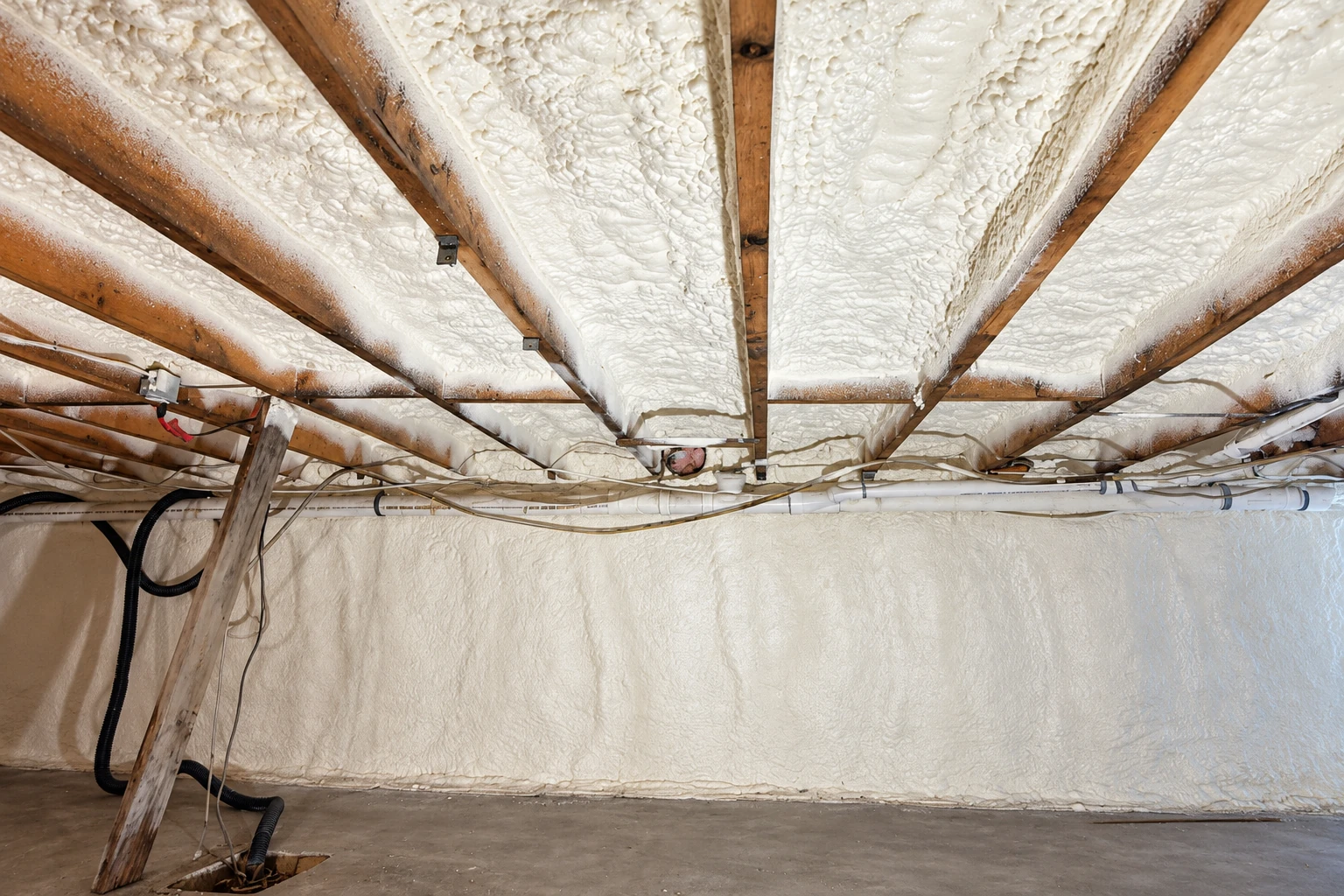
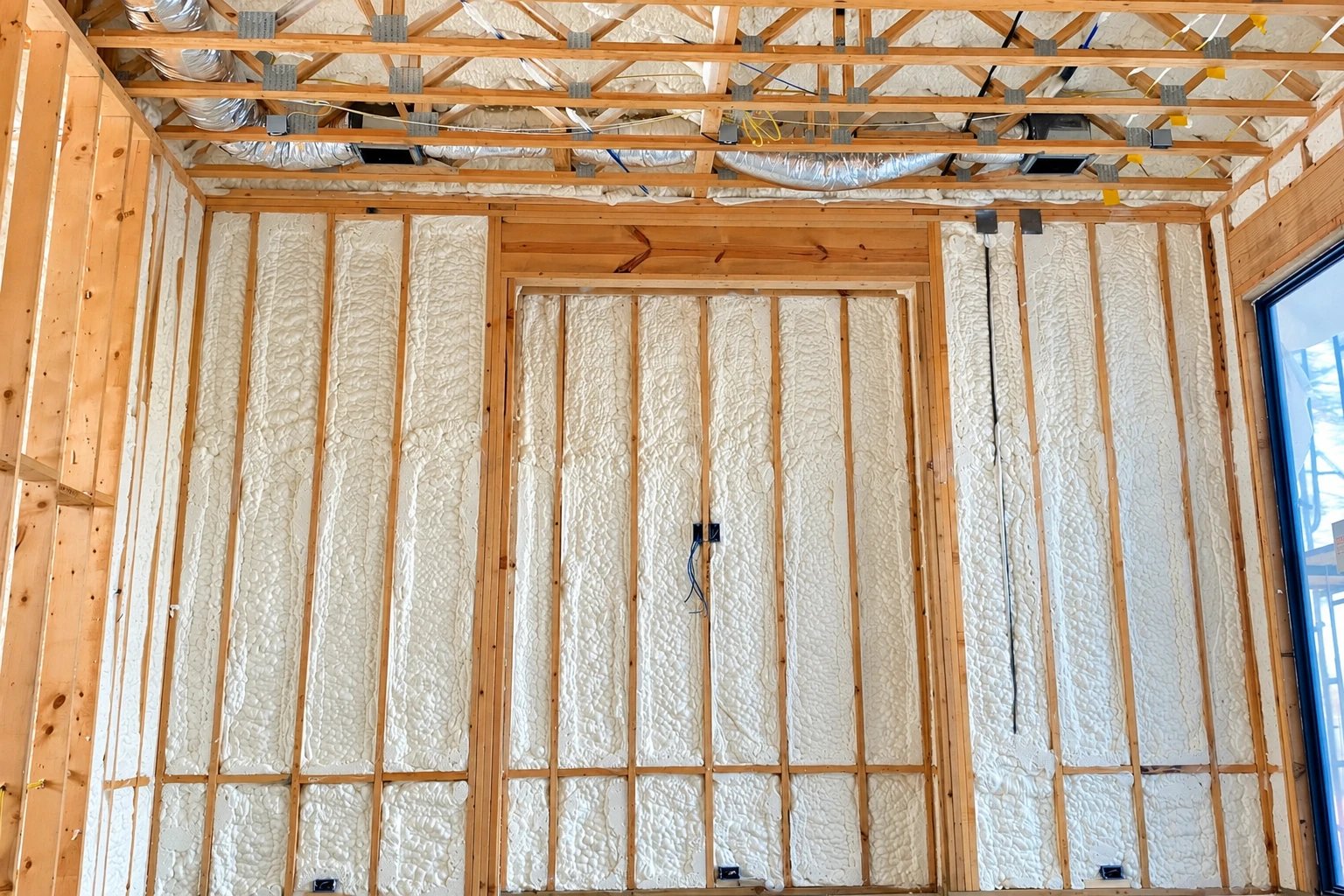
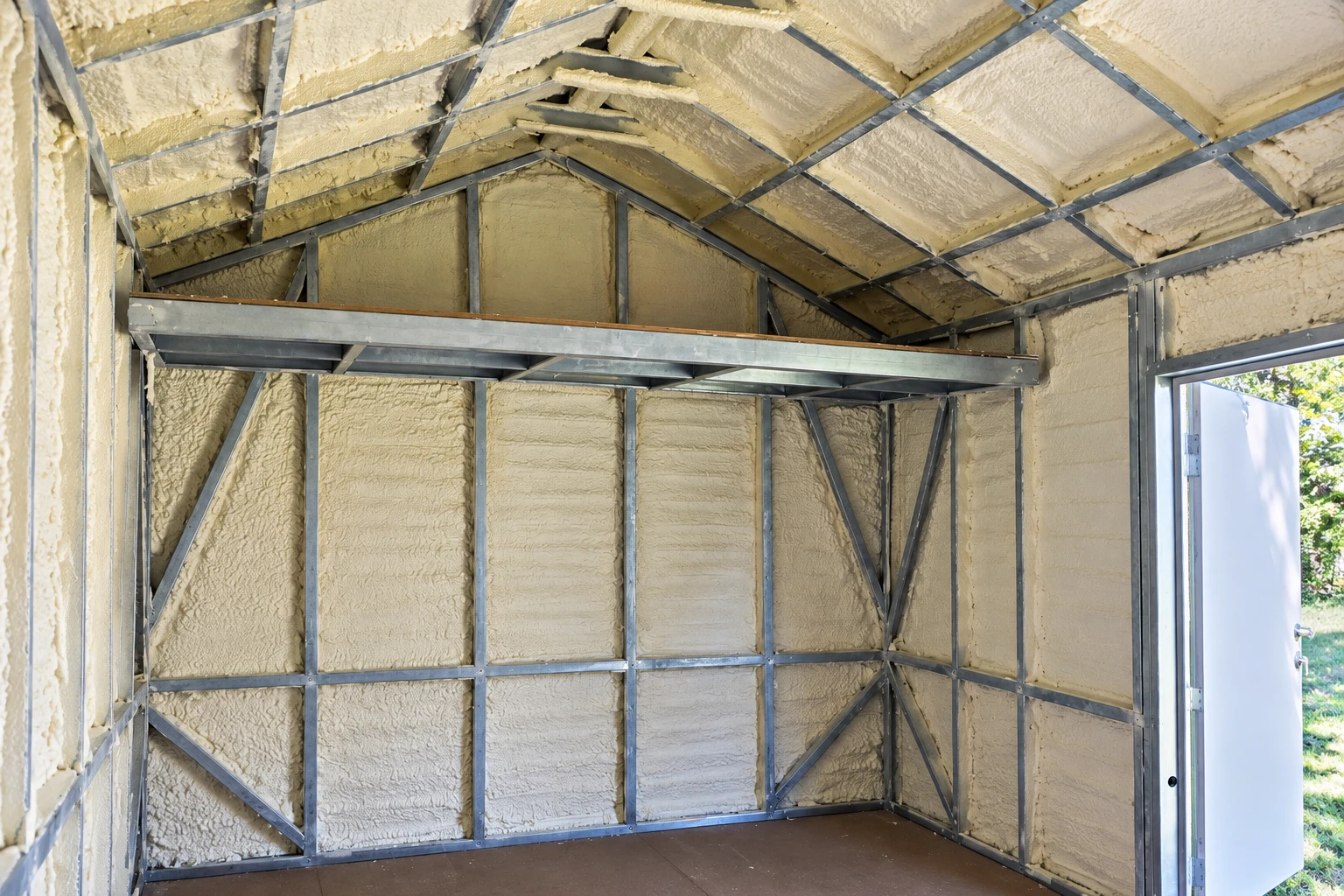
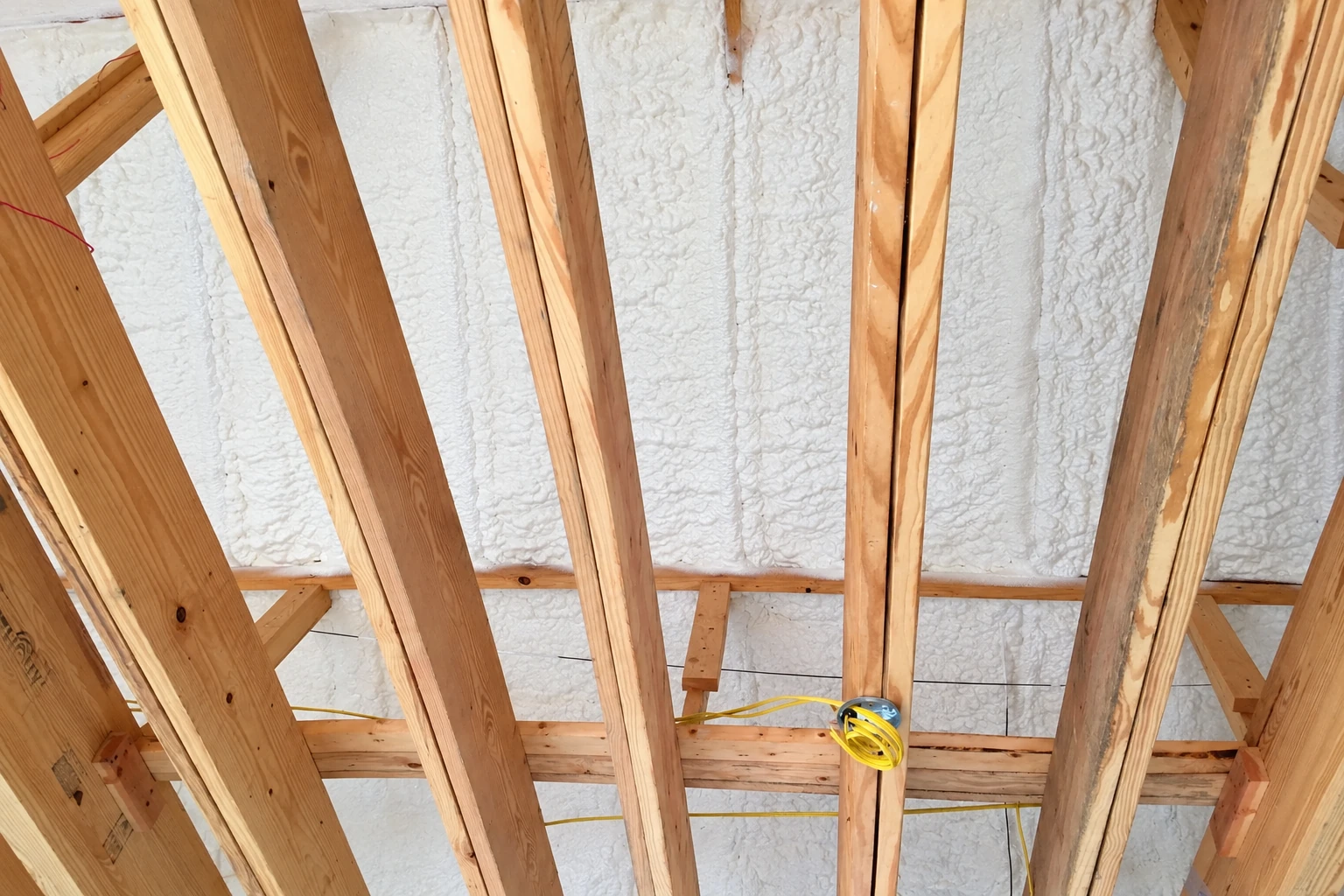
Spray foam insulation
Foam seals air while it insulates, which pays off when your ducts run through a hot attic. It costs more than loose fill, so I'll tell you plainly when it's worth it.
Professional Indio Insulation Services is an Indio-based insulation contractor working in Rancho Mirage, CA. We check and seal attics, crawl spaces and walls first, then add or replace insulation so cooled air stays in the rooms you use.
We drive over from Indio for Rancho Mirage jobs, the same way we do for Bermuda Dunes and for Palm Desert next door. Most of what we see here are single-story houses in gated and country club neighborhoods, plenty of them closed up for part of the year, with the air handler and ducts running through a low attic over the ceiling.
That layout shapes the job. A low attic means slow, careful work around the ducts, and older houses usually add thin, settled insulation, old can lights and eave vents that earlier work buried. What moves your price is how much attic there is, whether the old material has to come out first, how many gaps need sealing and whether foam makes more sense than loose fill. The schedule turns on how easy the attic is to reach and, with foam, how long you'll need to stay out before coming back in. I put all of it in your written estimate, each step listed in the order we'll do it, so you can see how a house built like yours gets handled.
Gaps around can lights, pipes, wires and the attic hatch get closed first, because insulation laid over an open gap ends up fighting a draft and collecting dust.
If what's up there is soaked, crushed or full of droppings, I tell you and we talk about taking it out, because fresh material on top keeps the problem in your attic.
I come out myself to see the job and write the estimate. Our lead installer runs the crew on the work, and I check it over before we call it finished.
Foam seals air while it insulates, which pays off when your ducts run through a hot attic. It costs more than loose fill, so I'll tell you plainly when it's worth it.
We check what's already up there, seal the gaps, keep the eave vents clear and then add insulation so the edges end up as deep as the middle.
Loose fill blown through a hose tops up a thin attic and settles in around trusses and wiring, where batts usually leave gaps beside them.
When some rooms run hot and others feel fine, I walk the attic, the walls and the ceiling over the garage to find where the heat gets in first.
When old insulation is soaked, crushed or full of droppings, we bag it, clean out the attic and cover your floors on the way through, so the house looks the way we found it.
When a house sits over a crawl space instead of a slab, we insulate the floor above it so the rooms over it stop feeling cold underfoot in winter.
Walls in older houses are often thin or empty. We fill them through small holes and patch them after, which helps the rooms that bake on the sunny side.
We close the gaps around pipes, wires, can lights and the hatch before any insulation goes in, so cooled air stays in the rooms and desert dust stays out.
Basements are rare out here, but where a house has one, we insulate the walls so the space below holds a steady temperature and stops pulling heat from upstairs.
Closed-cell foam is dense and blocks moisture as well as heat. We use it where a thin layer has to do a lot of work, like a low roof deck or the room over the garage.
Open-cell foam is softer and lighter, and it fills big spaces for less than closed-cell. It works well under the roof when the air handler and ducts live up in the attic.
We insulate and seal offices, shops and rental units, and we plan the work with property managers so tenants and customers are kept out no longer than the job needs.
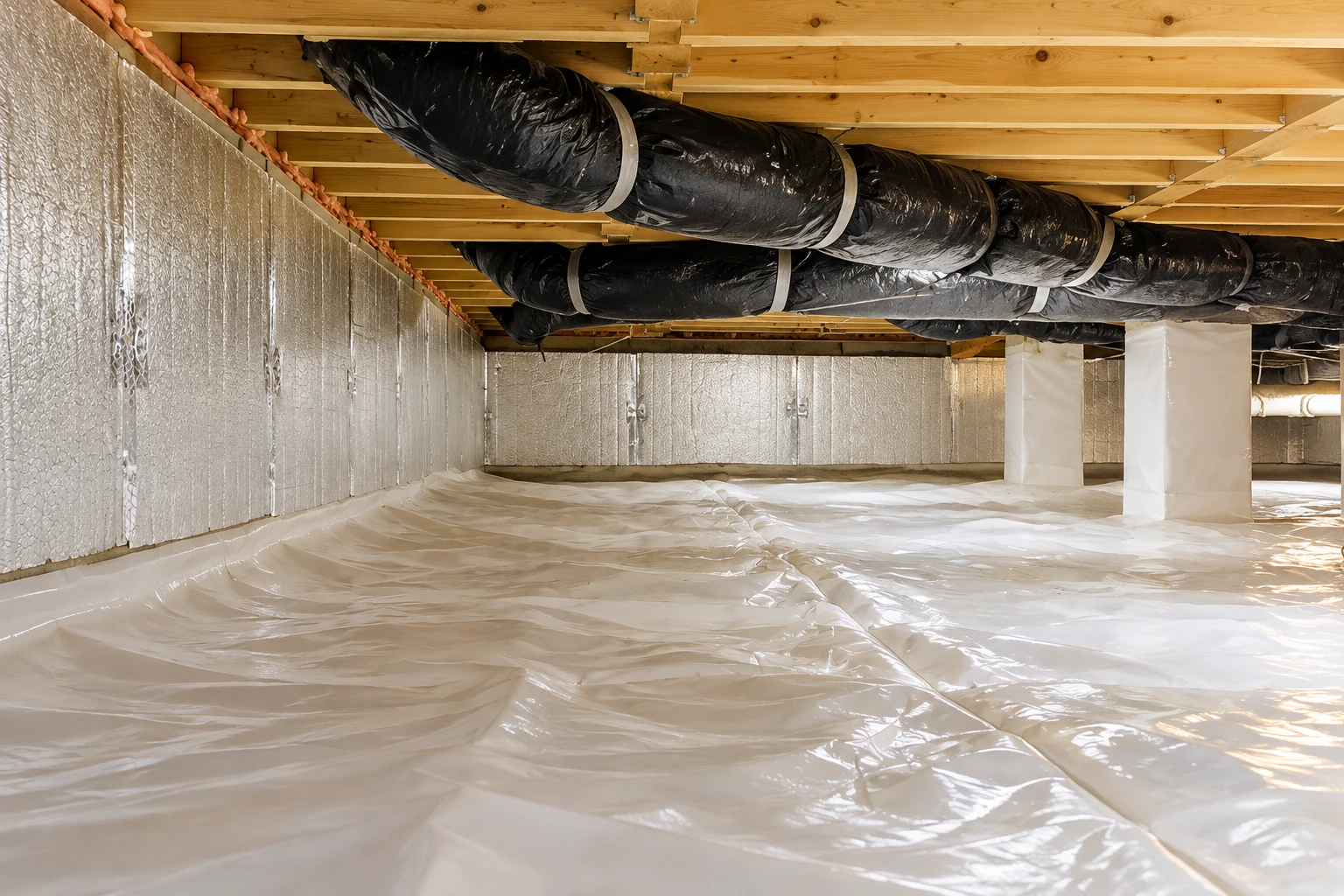
A sheet laid over the dirt under the house keeps ground moisture away from the framing and the insulation above it, and we tape the seams so it stays in place.
We check first whether your wall or ceiling actually needs a vapor barrier, then install one where moisture would otherwise reach the insulation or the framing.
From inside the attic we seal the tops of the walls, every pipe and wire hole and the hatch, before new insulation goes down and covers them for good.
In a house that's been lived in for years, we add insulation where it's missing without tearing out what's still good, and we start with the rooms that bother you most.
Send the form and we'll reply within one business day to set a time. I come out, look at your attic and give you a free written estimate, with no obligation to go ahead.
The estimate is done on site, not guessed over the phone, so it reflects the inches already in your attic, the gaps we find and how easy the space is to reach.
Your estimate lists each step the way we'll do it, checking, then sealing, then insulating, so you can see that nothing gets skipped along the way.
We're fully licensed and insured. Your satisfaction, guaranteed, and we clean up before we pack up so the house looks the way we found it.
Here's what Rancho Mirage homeowners usually ask before hiring an insulation contractor, from licensing and payments to dust, foam and getting back inside.
The Contractors State License Board licenses and regulates contractors across California, so it's the place to start if you want to check on a contractor's state license before hiring. We're fully licensed and insured, and you're welcome to check with the board before I come out to look at your house.
The state board says no more than $1,000, and less than that on smaller jobs, since the cap is also tied to a share of the contract price. Any other payments have to be clearly listed in the contract and based on work already done or materials delivered to your home, and the board says that applies to all home improvement projects.
For blown-in insulation and air sealing, you can usually stay home while we work. Spray foam is different, because the foam maker sets a re-entry time, the wait before people and pets can come back inside, and I tell you that time before the job starts so you can plan around it.
For most attics, sealing the gaps and topping up blown-in insulation is the better buy. Foam costs more, but it seals air while it insulates, so it earns its price when your air handler and ducts sit up in the attic, which is common here. I look at where your ducts run before recommending either one.
It can be. An earlier draft of the city's safety plan says most of Rancho Mirage is highly susceptible to wind erosion, and on windy days fine dust can get pulled through gaps at the hatch, pipes and can lights. That's why we seal before we insulate, and why we keep the eave vents clear instead of burying them.
These are the Coachella Valley cities with their own page on our site. If yours isn't listed, call (760) 262-0752 and ask, because we're glad to hear from people farther out too.
Call (760) 262-0752 until 11 PM on weekdays or send the form, and we'll set a time for me to come look at your attic.