
Bare dirt through the hatch
If you open the crawl space hatch and see bare dirt, nothing is stopping ground moisture from rising under your floors. That's the most common reason people call us about this job.
Bare dirt, a musty smell or water under the house? We fix the water first, then cover the ground the way your crawl space needs.
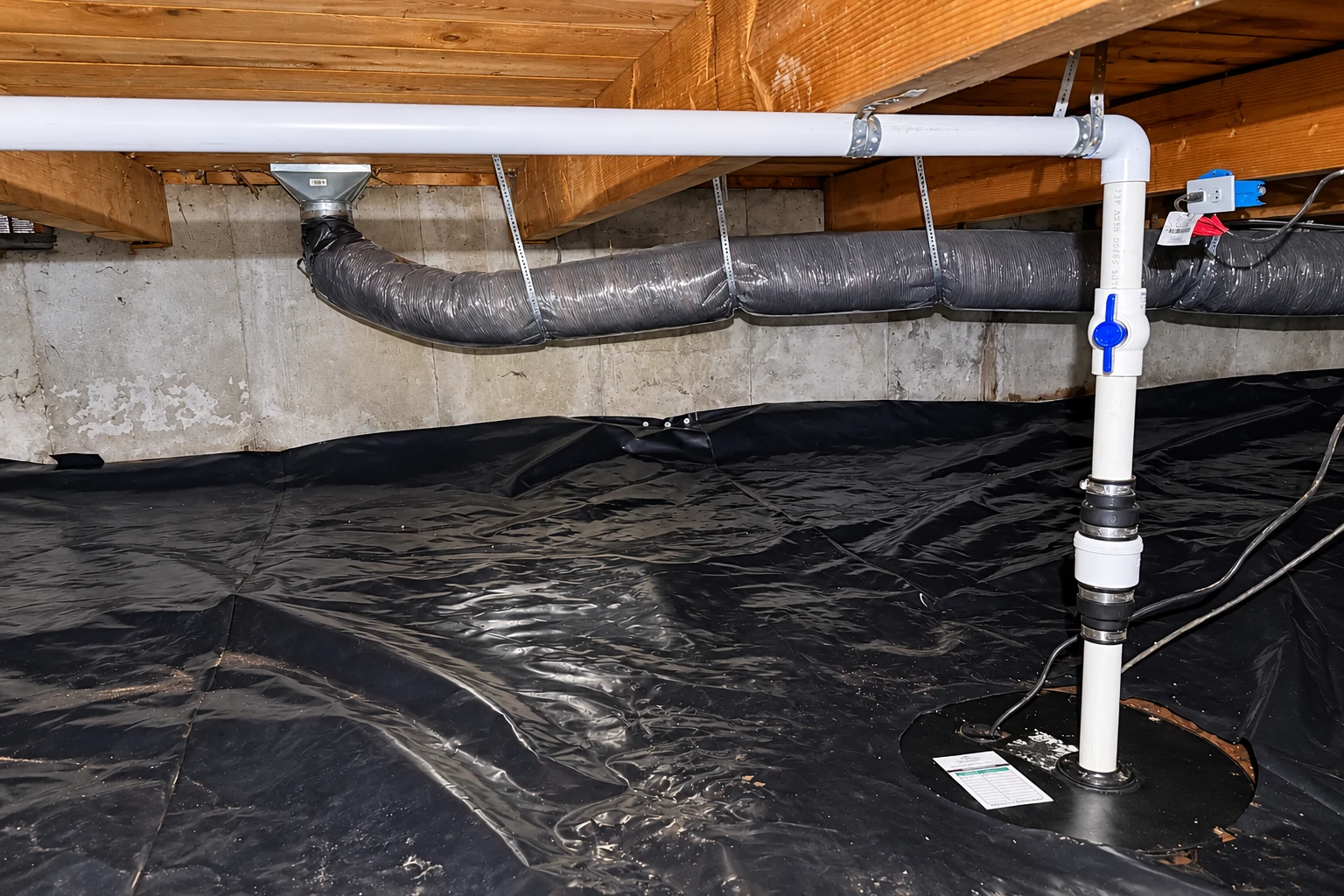
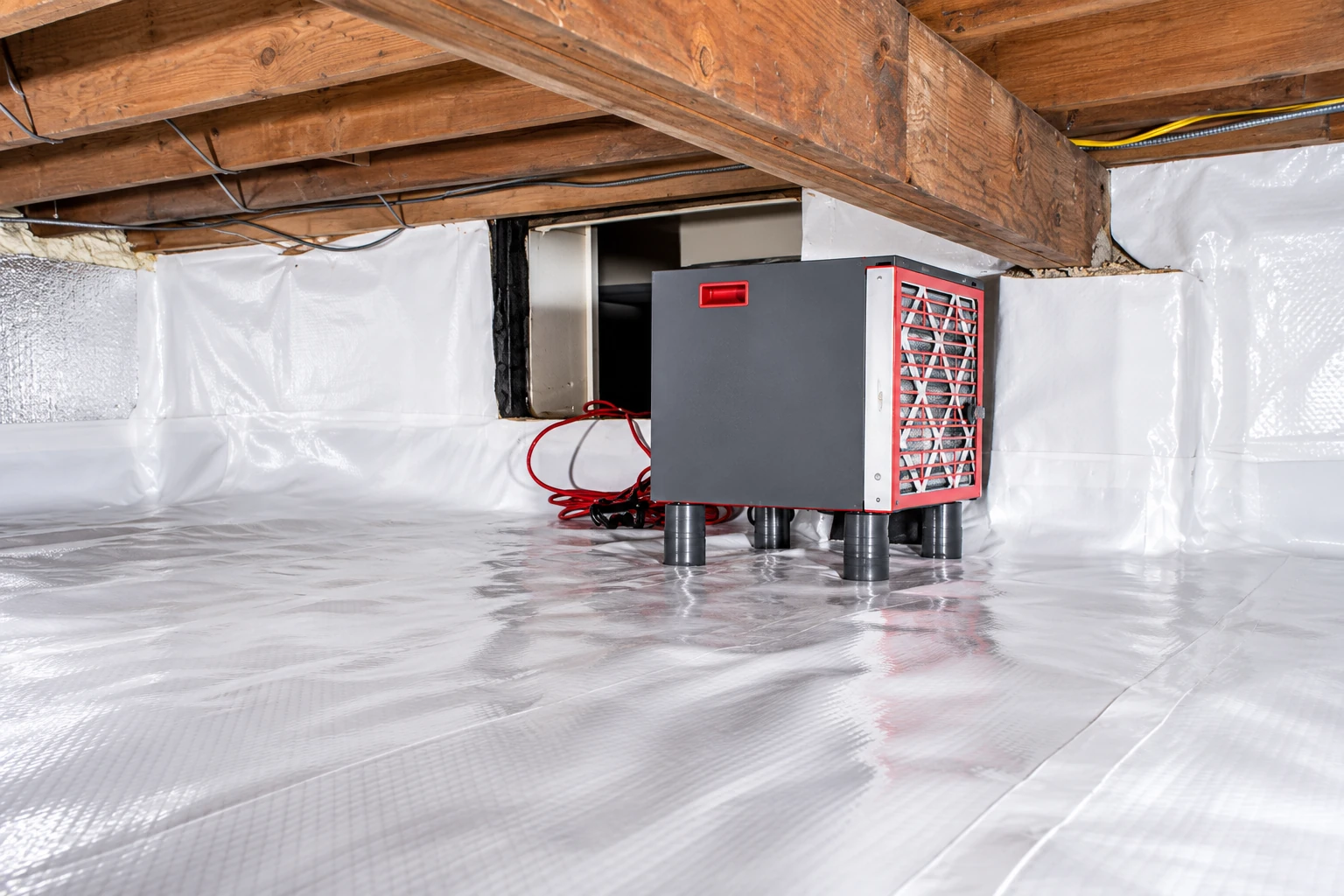
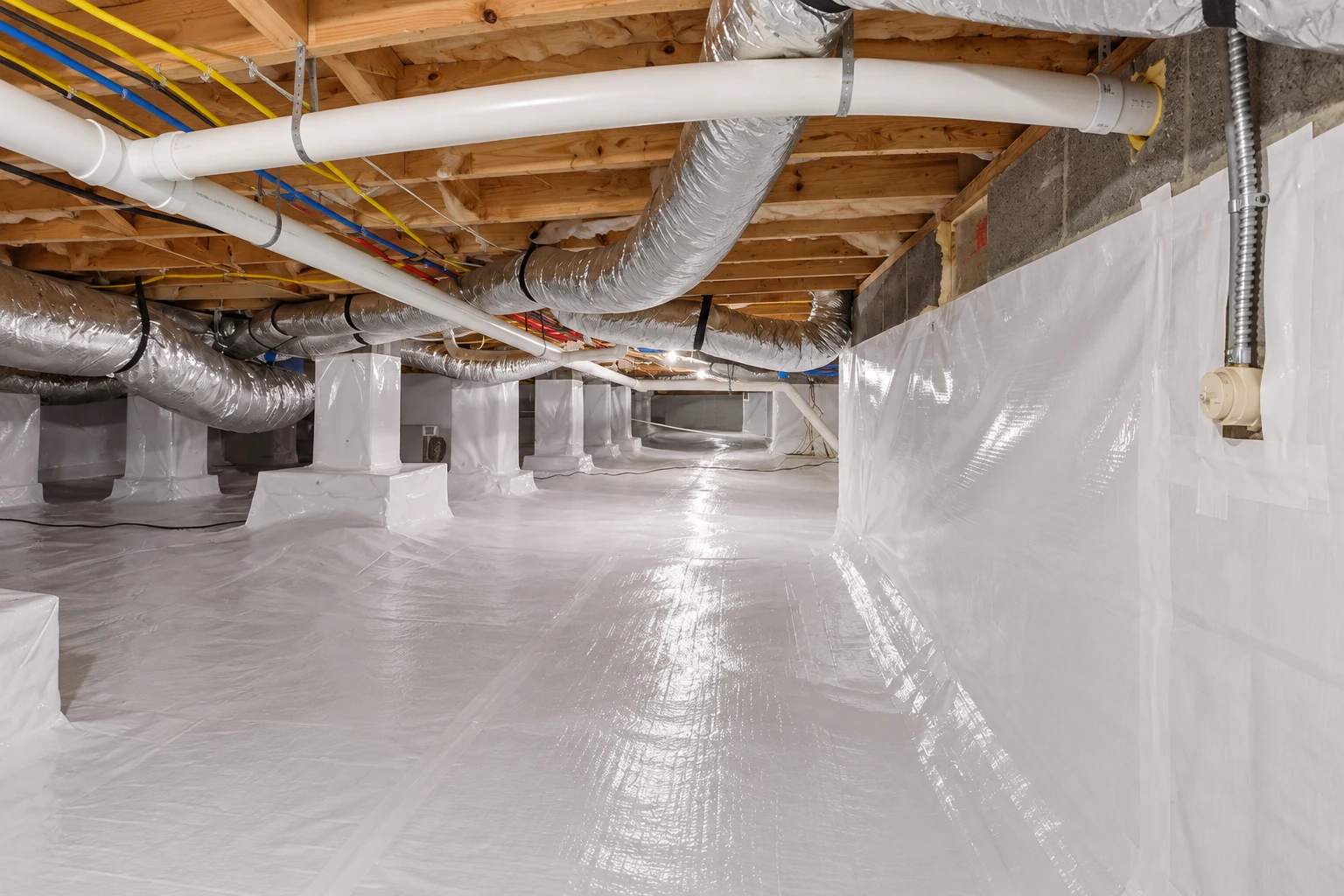
A crawl space vapor barrier is a heavy plastic sheet we lay over the bare dirt under your house in Indio, so moisture from the ground stays down there instead of drifting up into the space under your floors.
Most people call once they've looked through the crawl space hatch and aren't sure what they're seeing. The price mostly turns on how big the crawl space is, whether it stays vented or gets sealed, how heavy a sheet it needs and whether there's water or junk to deal with first. The schedule turns mostly on the water, because a leak gets fixed before the barrier goes in, and your written estimate lays out which of those apply to your house. We're based in Indio and work across the Coachella Valley cities around it, and we're glad to hear from people farther out too.
I come out myself and look at the dirt, the vents, any water and anything installed down there, because a lot of this can't be known until someone is in the crawl space.
Your estimate lists each step in the order we'll do it, water first, then cleanup, then the sheet, so you can see nothing gets skipped and nothing gets done backward.
We're fully licensed and insured. Our lead installer runs the crew, and I check the crawl space over myself before we call it done and leave your house the way we found it.
The first question is whether your crawl space keeps its vents open with plastic over the dirt or gets closed up and sealed, because those are two different jobs, and I settle it with you before anything else. If there's standing water, we trace where it comes from and get that fixed before any plastic goes down. Next our crew clears out stored items and debris so nothing is left between the sheet and the ground, lays the barrier and cuts it around piers and pipes. A sealed job takes extra work at the seams and walls, which the questions below cover. Once the crew wraps up, I crawl through and check it over, and we pack out everything we brought in.
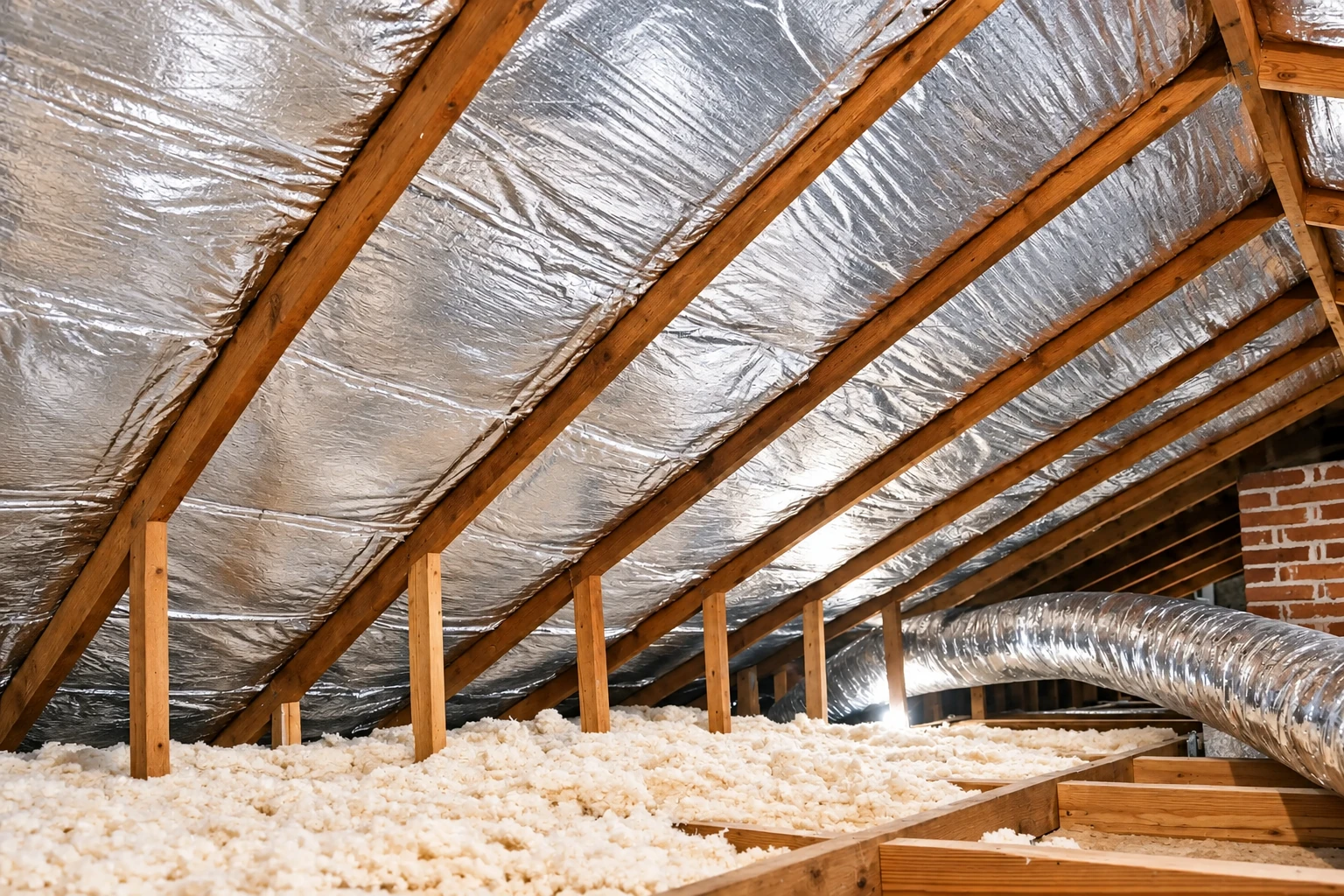
Moisture and air don't stop at the crawl space. If you need a vapor barrier somewhere other than under the house, that's our vapor barrier installation work. Up top, attic air sealing follows the same order we use down below, finding and closing the gaps first and insulating after.
If you open the crawl space hatch and see bare dirt, nothing is stopping ground moisture from rising under your floors. That's the most common reason people call us about this job.
A thin sheet that's ripped, pushed into piles or missing in spots isn't covering the ground anymore, and pulling it out and starting clean usually beats patching around the damage.
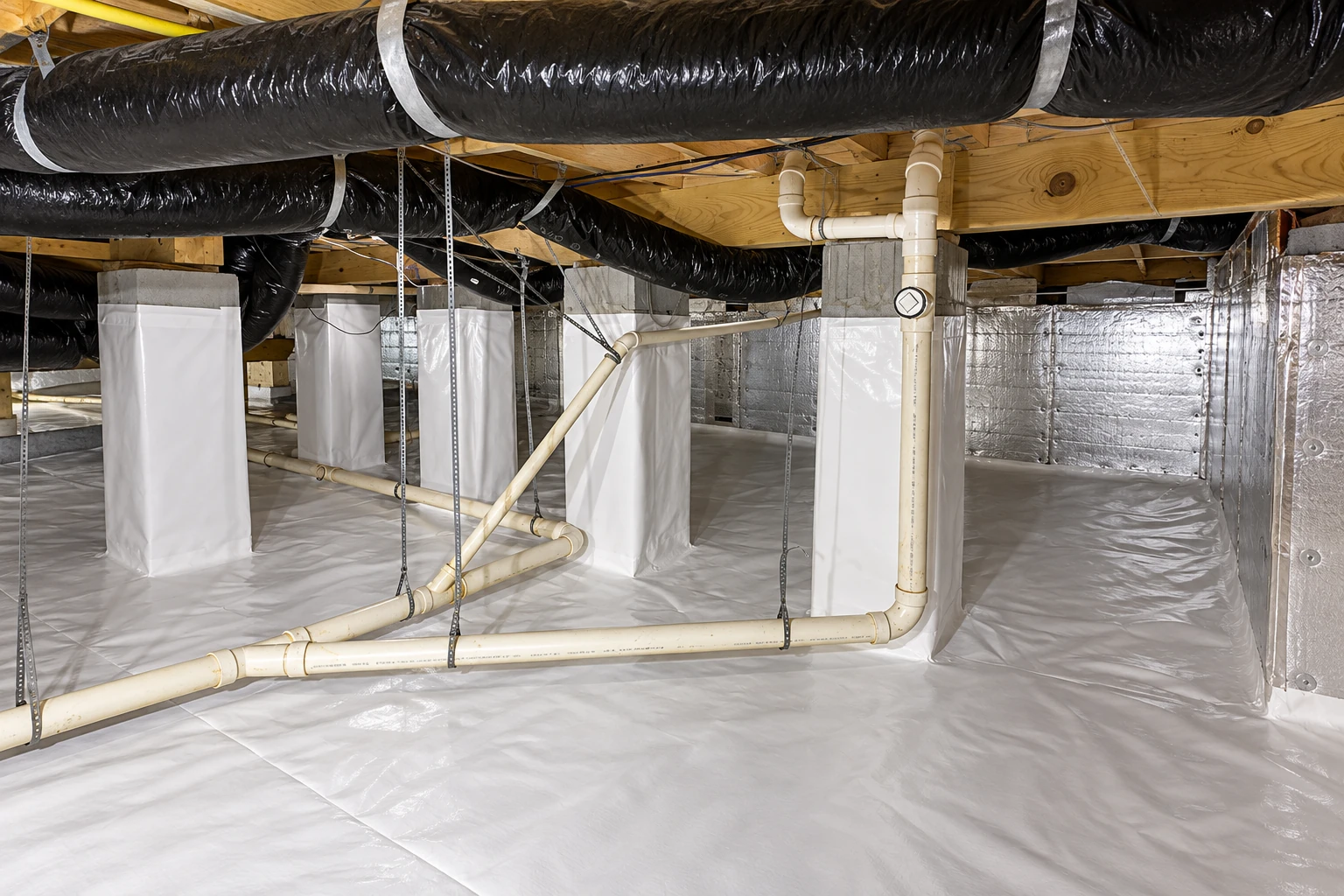
When ducts or equipment live in the crawl space, it changes how we plan the job, and closing the space up takes extra care. I look at what's installed before we pick a scope.
Property managers call us about crawl spaces nobody has looked at in years. I go in, note what's there and write it up step by step so the owner can approve it.
Send the form and we'll reply within one business day to set a visit. I come out, look at the crawl space and give you a free written estimate, with no obligation to go ahead.
In the form or an email to info@insulationindio.com, mention whether the crawl space has vents, standing water, or a gas furnace or water heater down there, so I come ready to check it.
We check with the city or county office that covers your address. If the job needs a permit, we pull it and set up the inspections so you don't have to.
Under California law, homeowners 65 and older have five business days to cancel a home improvement contract, so there's time to look ours over and think it through.
Examples of sheet weights, seams and wall runs to talk through, so you can picture a floor cover next to a fully sealed crawl space.
Straight answers to what Indio homeowners ask about covering, sealing and drying out a crawl space before deciding which job they need.
It covers the bare dirt floor so ground moisture and soil gases such as radon have a harder time getting into the crawl space. A well-installed barrier helps keep both down, though it won't make them disappear. A torn or partial sheet does much less, which is why we cover the floor completely.
A sealed crawl space takes more work, because the barrier gets sealed and fastened instead of just laid down. Federal guidance runs the sheet up the walls, columns and the bases they stand on either way, but seals seams and openings only in a closed crawl space. There, the liner is fastened to the walls too, since tape or adhesive alone may not hold it.
No, closing the vents alone doesn't turn a vented crawl space into a dry, sealed one. A federal guide on closing crawl spaces warns that skipping the other steps can raise moisture, and it can create a deadly situation if a gas furnace or water heater down there draws its air from the space. We check for that before we pick a scope.
At least 6 mil thick, according to the same federal guidance, and thicker reinforced polyethylene holds up better. A plain 6-mil sheet needs protection where someone crawls in to service equipment, so if ducts or a heater sit under your floor, a tougher sheet may be the better fit. I'll tell you which weight suits your house at the estimate.
The water comes out, and its source gets found and repaired before any barrier goes in. The federal guide on closing crawl spaces puts that first, because without the repair the water comes back and moisture climbs again. It's the first line on your estimate, and what the fix takes I'll only know once I've seen where it's coming from.
Our phones are open until 11 PM on weekdays and 10 PM on weekends, so call (760) 262-0752 after work or send the form.