
Topping up thin insulation
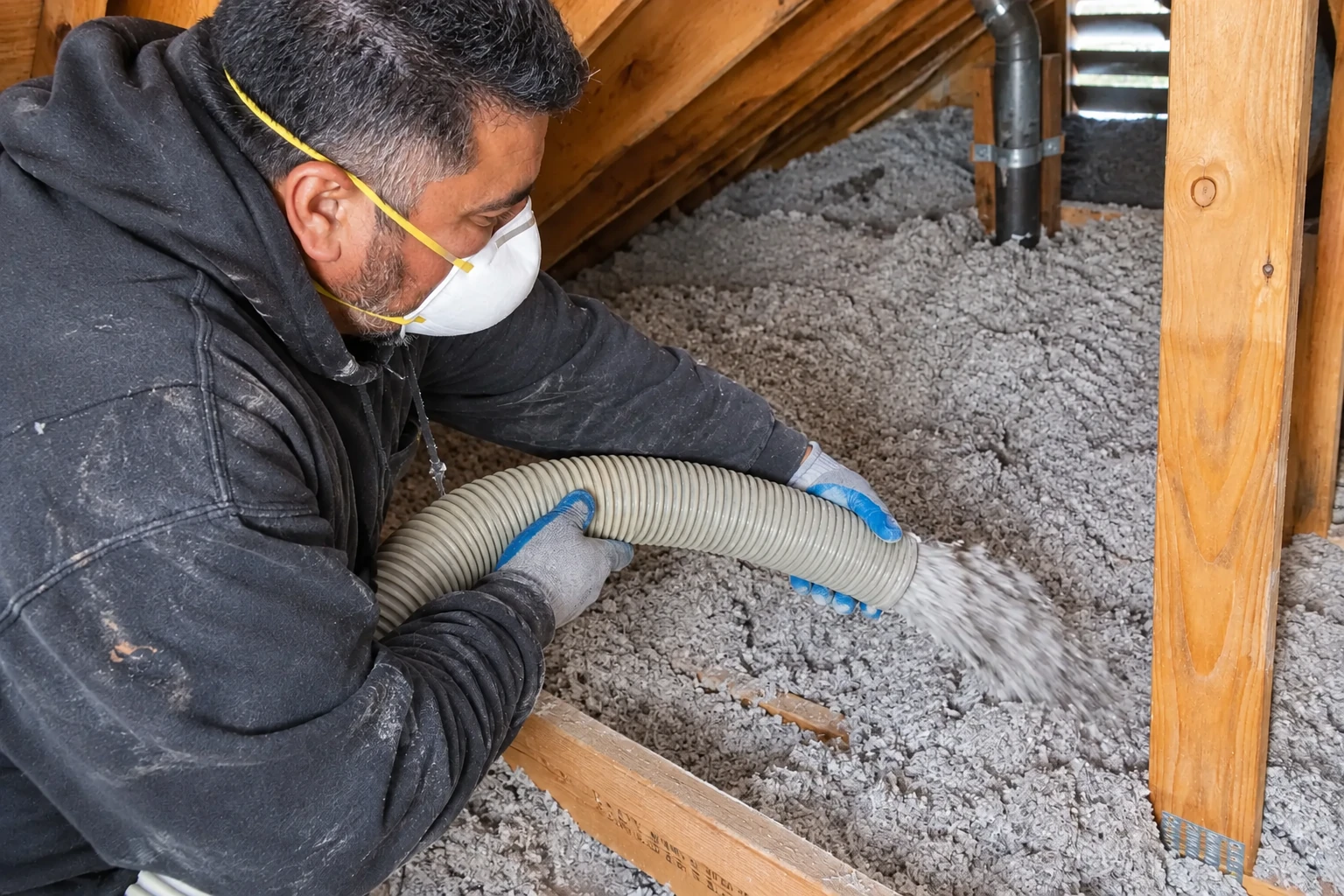
If your attic has only a few inches left, sealing before the top-up means the new fill isn't working against air leaking up from the rooms below it.
Hot upstairs rooms and a drafty house often trace back to leaks into the attic. We find them and seal them before anything else goes down.
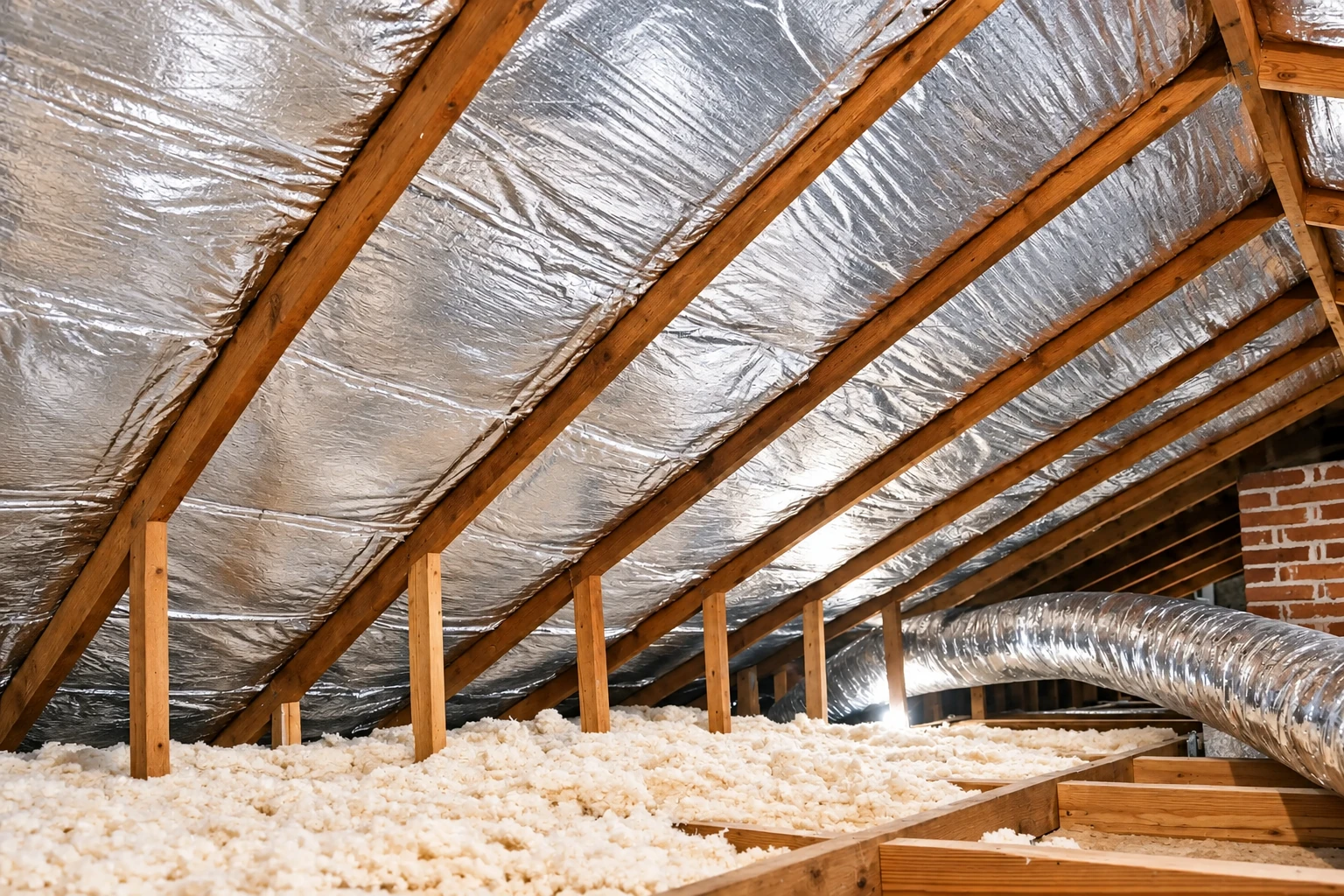
Attic air sealing in Indio, CA closes the gaps between your living space and the attic, around light fixtures, duct boots where the vents meet the ceiling, wiring, pipes and flues, so less of your cooled air leaks out and the power bill comes down. Done right before new insulation, it also helps keep moisture problems out of the attic.
Most people call about a hot upstairs, a room over the garage that never feels right, or a plan to add insulation, and sealing comes first because insulation laid over open gaps just fights the draft. The price moves with how much old insulation is up there, whether it needs insulation removal first, how many big openings and recessed lights we find and how easy the attic is to move around in. The schedule turns on those same things and on anything that has to be fixed before sealing, and national guidance has attic work in hot weather start early in the day because the attic keeps heating up as the day goes on. Your written estimate lists each step in the order we'll do it.
I cooked on a restaurant line for years, where you prep before you cook. We treat an attic the same way, checking and sealing before insulating, because a skipped step costs you later.
I come out to look at the attic and write the estimate. Our lead installer runs the crew, and I check the work over before we call it finished. Your satisfaction, guaranteed.
We're fully licensed and insured. We check permits for each job with the city or county office that covers your address, and when one's needed we pull it and set up the inspections.
I start with a look at the attic and the rooms below it, noting how many inches of insulation are already up there, how old the house is and anything that has to be fixed before sealing. If you have gas appliances, we talk through having them tested before and after the work, for the reason in the questions below. On the day, our lead installer's crew goes after the big openings first, where the walls tie into the attic floor and around dropped ceilings, because that's where sealing pays off. Insulation doesn't stop air, so gaps get caulk, foam or sealant, wide openings get rigid blocking sealed in place, and chimneys and gas vents get heat-rated caulk or foam with a dam built around them. We keep the eave vents clear so the attic still breathes, and we leave your house the way we found it.
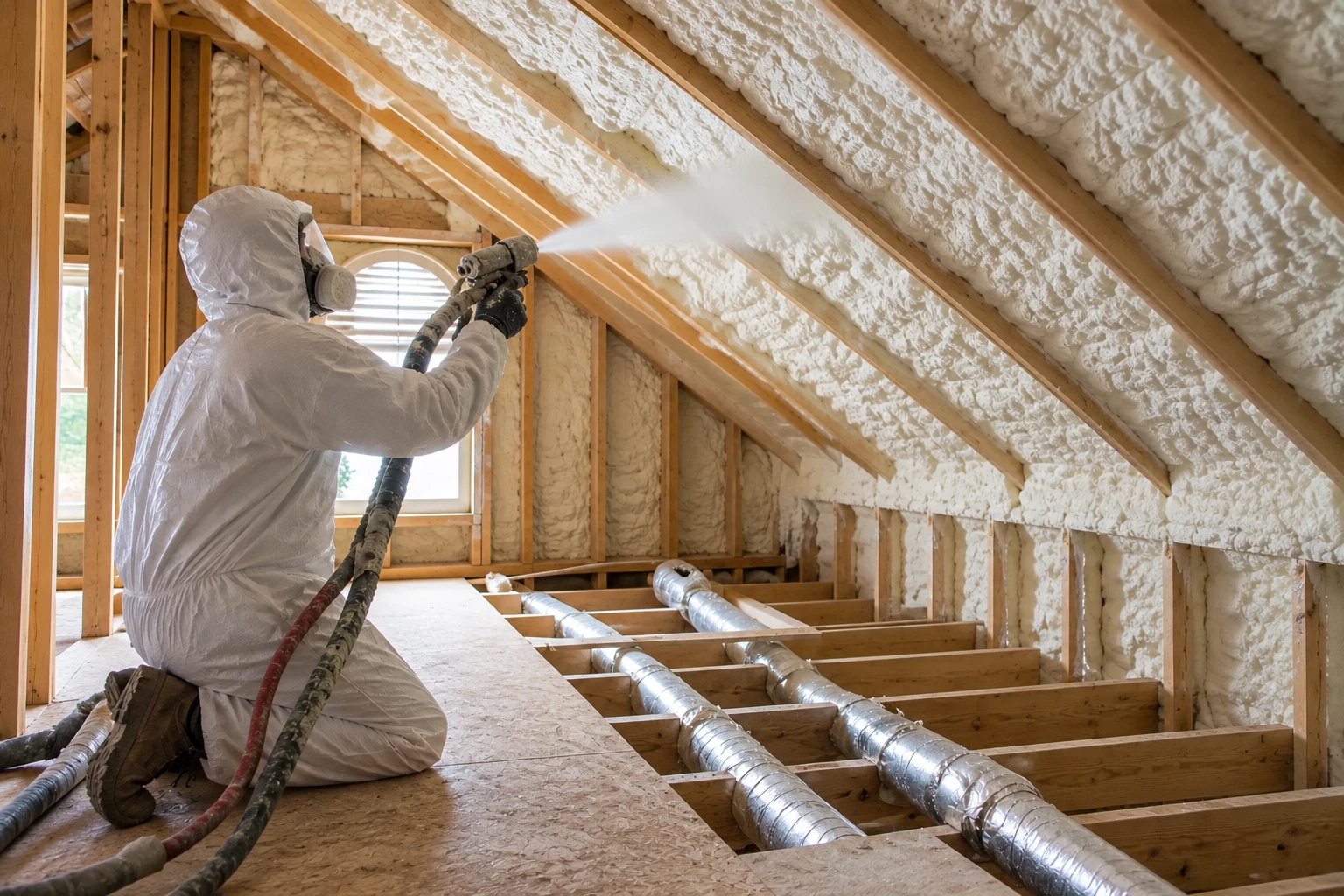
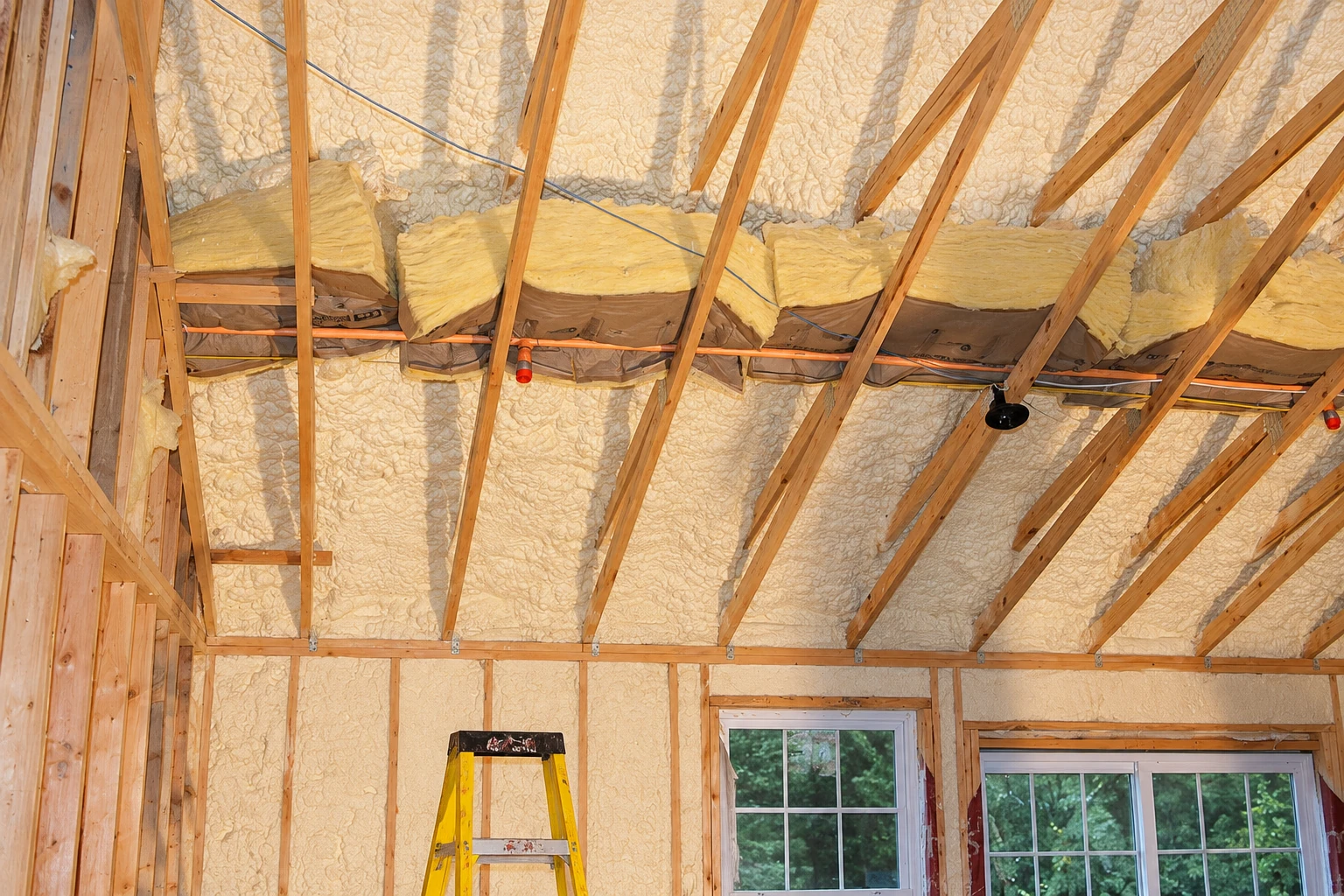
Sealing is usually the first half of the job. If you're adding insulation to an older house, retrofit insulation comes right after, spread full depth out to the edges instead of piled in the middle. Spray foam insulation seals and insulates in one pass but costs more, so I usually steer people toward sealing the gaps and topping up loose fill unless the ductwork runs through the attic, where foam earns its price.
If your attic has only a few inches left, sealing before the top-up means the new fill isn't working against air leaking up from the rooms below it.
Gaps around fixtures, pipes and the hatch let cooled air slip into the attic all day, and closing them is the part of the job that brings the bill down.
When soaked or dirty insulation gets pulled, the attic floor is bare and every gap is in plain sight, so it's the easiest time to seal before anything new goes in.
Property managers call us too. The written estimate lists each step in order, so whoever signs off can see what gets sealed, what gets fixed first and what comes after.
Send the form or call, and we'll reply within one business day to set a time. I come out, look at the attic and give you a free written estimate with no obligation.
List anything in the house that runs on gas, like a furnace, water heater or fireplace, so we can talk through having it tested before and after the sealing.
Tell us roughly how many can lights you have and whether you know if they're rated to sit in insulation, because that rating changes how we seal around them.
Mention a roof leak, old wiring, vermiculite or bath fans venting into the attic, so we can plan around those fixes before any sealing starts.
These illustrative photos show sealed wall tops, boxed light fixtures and foamed pipe gaps, so you can point to what looks like your attic.
Straight answers on the order of the work, gas appliances, licensing and what has to be fixed before sealing starts.
Yes, seal first. National guidance on this work handles combustion safety and indoor ventilation first, then attic ventilation, and finishes the air sealing before any insulation goes down, and owners planning new insulation get the most savings that way. Once insulation is in, the gaps are buried and much harder to reach.
It can be, as long as the appliances get checked. Sealing can sometimes push combustion gases from gas or oil appliances back into the house, so owners with them can have a Home Performance Contractor test for proper drafting before and after the sealing. I'll talk that through with you at the estimate.
A short list of things puts sealing on hold until they're handled. One attic sealing guide names active knob and tube wiring, vermiculite insulation and bathroom fans vented into the attic, plus a leaking roof or an unvented kerosene heater or gas fireplace. If I spot one, I'll tell you and we plan around it first.
Only if the job is very small. California raised the dollar limit for minor work done without a license from $500 to $1,000, and it applies only when the work needs no permit and the person employs no one on the project. Insulation work falls under the C-2 insulation classification, which you can look up with the state licensing board.
They do, and it starts with whether yours are ICAT-rated, the rating for fixtures made to sit in insulation and stay airtight. Fixtures without that rating get boxed in with drywall or rigid foam sealed at every seam. If you don't know what you have, I'll check when I'm up there.
Call (760) 262-0752 or use the form, and if insulation's already scheduled, catching the gaps now is easier than digging them out later.